Marlene McCarty at Kunsthaus Baselland
Soloshow «Into the Weeds», January 24 until July 5, 2020
Artists
Institution
Download
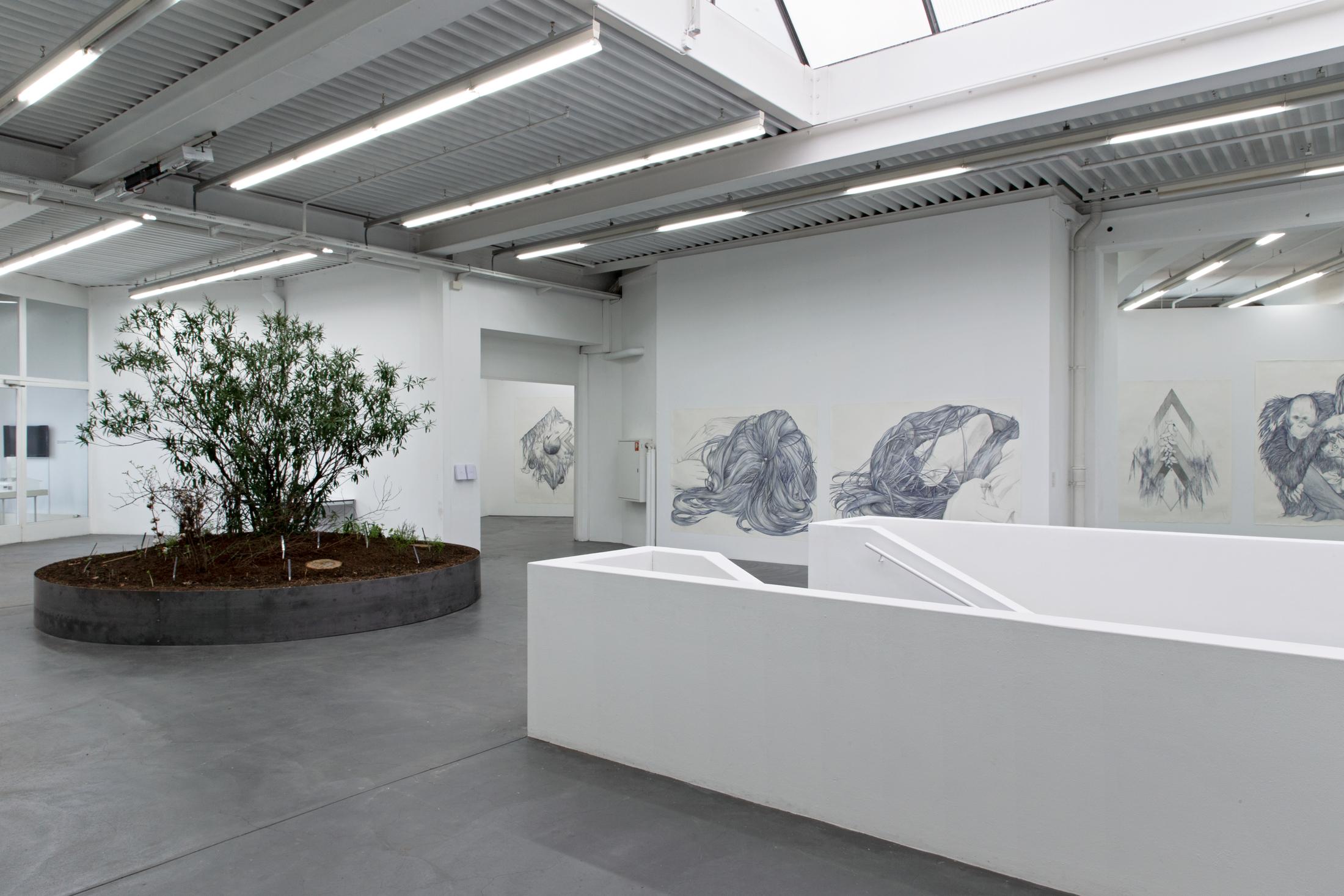
Exhibition View Marlene McCarty Soloshow «Into the Weeds; view on Into the Weeds, 2019 / Devil’s Snare, Male Pattern Baldness, Sag, Modern Mastery, Tumor or Goiter or Mammilla, Hell’s Bells, 2019 / “14”(2) / “14”(4), 2014 / Invocation, Mutton, Escutcheon with Chevron, Rosary Pea, Body Odor, Benediction and All the Good They’d Do, 2019» at Kunsthaus Baselland, Muttenz, 2020 / Photo: Gina Folly / Courtesy: the artist and Sikkema Jenkins & Co. Gallery
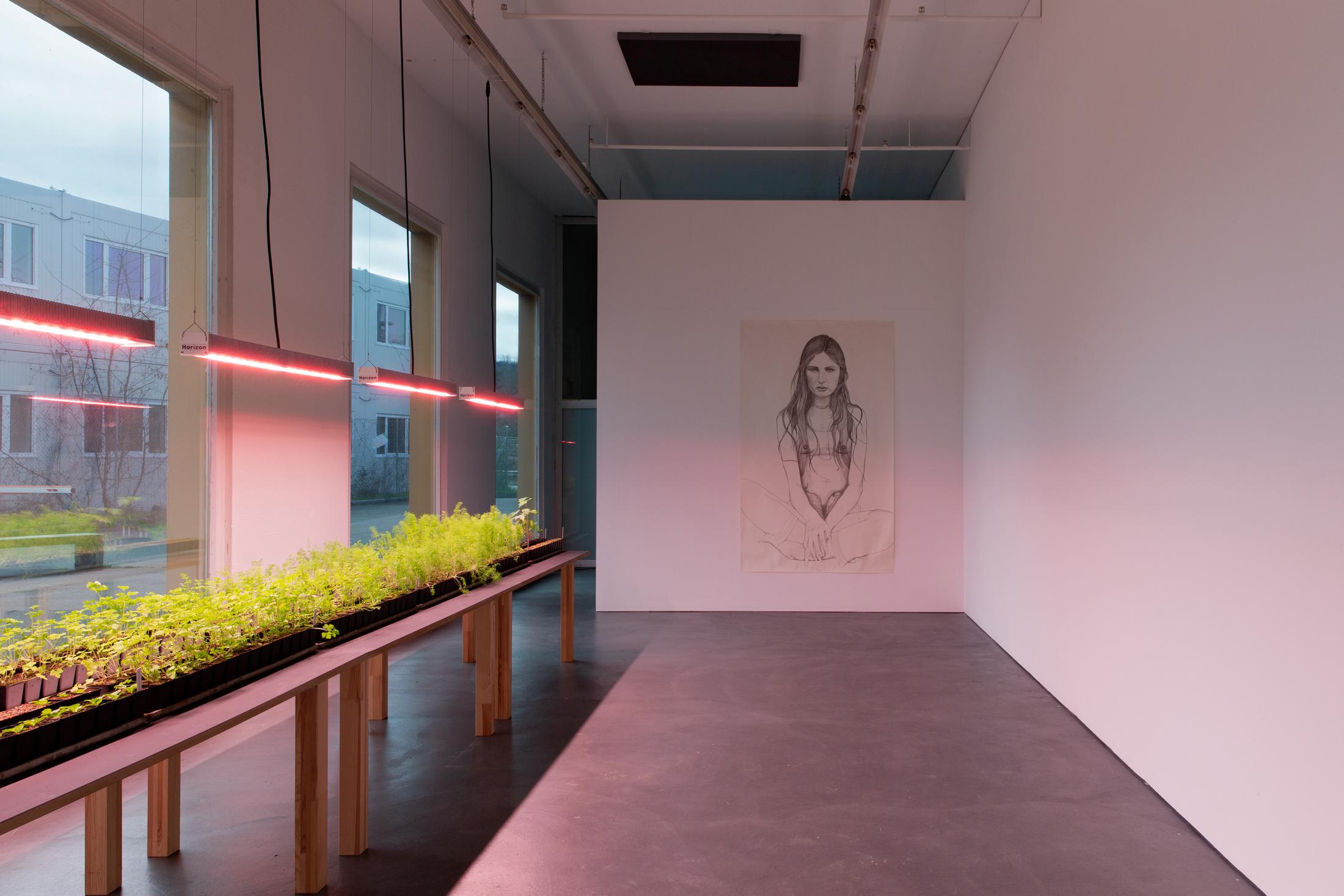
Exhibition View Marlene McCarty Soloshow «Into the Weeds; view on Marlene Olive – June 21, 1976, 1995-1997» at Kunsthaus Baselland, Muttenz, 2020 / Photo: Gina Folly / Courtesy: the artist
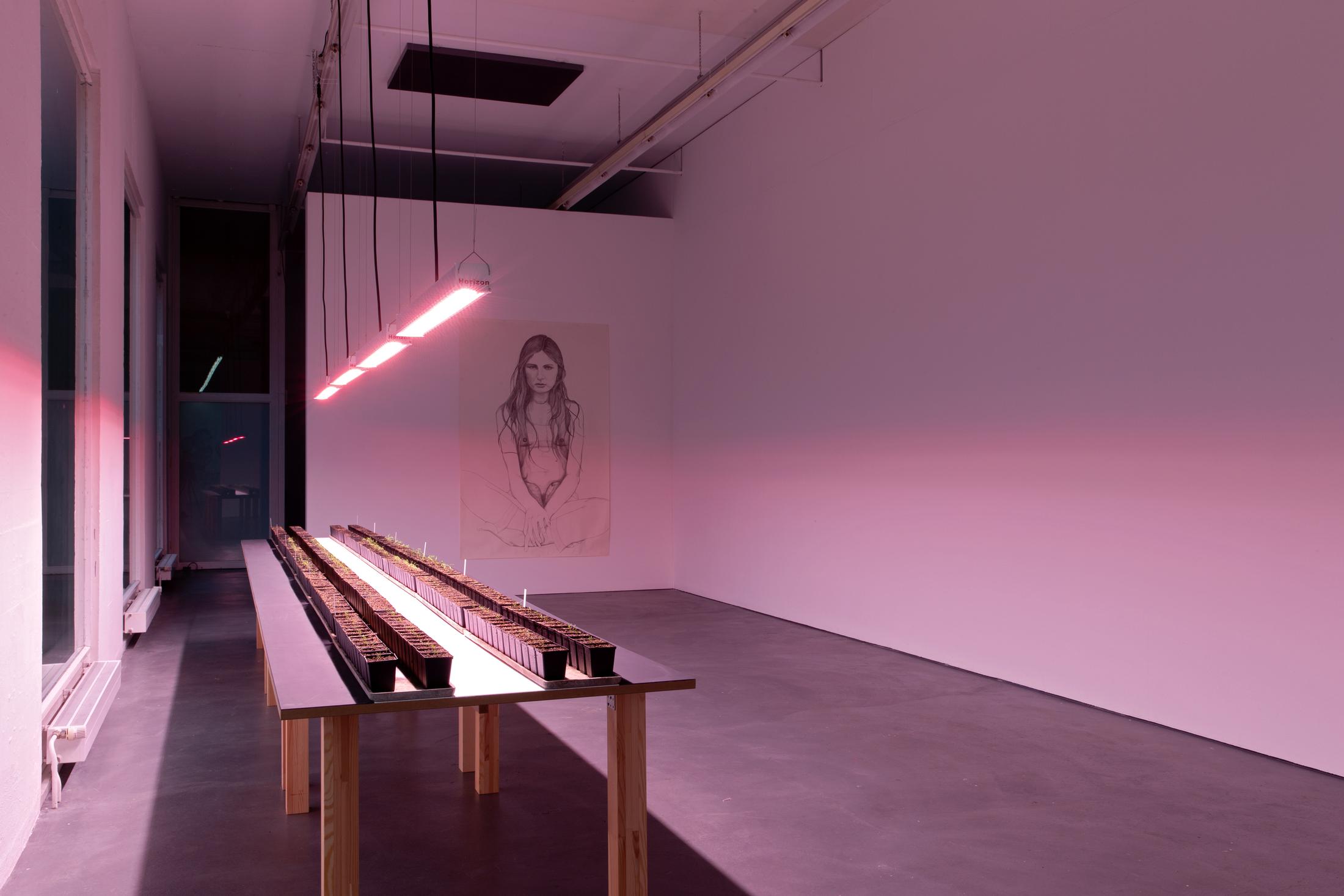
Exhibition View Marlene McCarty Soloshow «Into the Weeds; view on Marlene Olive – June 21, 1976, 1995-1997» at Kunsthaus Baselland, Muttenz, 2020 / Photo: Gina Folly / Courtesy: the artist



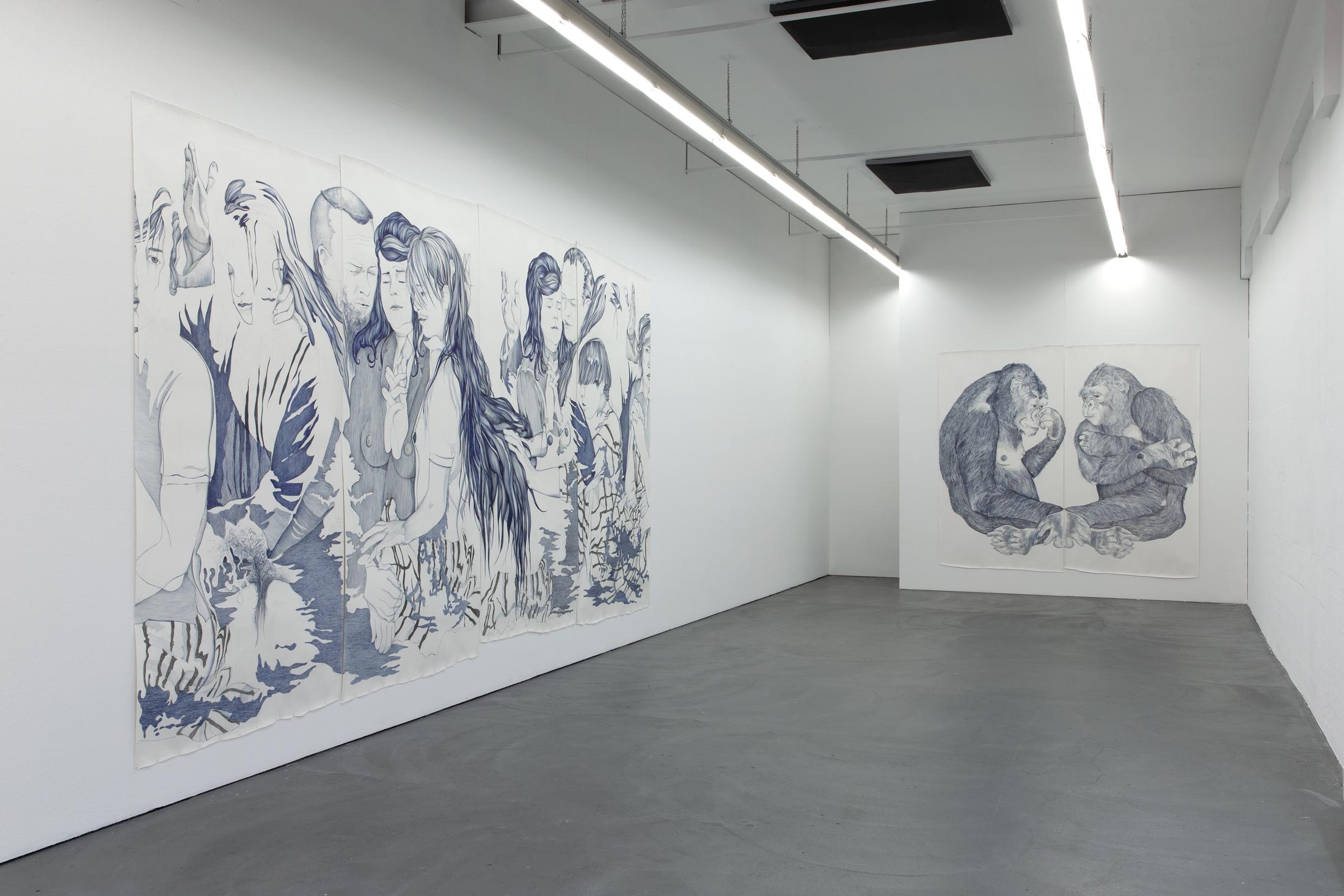
Exhibition View Marlene McCarty Soloshow «Into the Weeds; view on GROUP 1.3 (Lititz, Pennsylvania. Sunday, November 13, 2005. 11:25 am), 2007 / GROUP 10.2 (Stinker. Hug.), 2007» at Kunsthaus Baselland, Muttenz, 2020 / Photo: Gina Folly / Courtesy: the artist
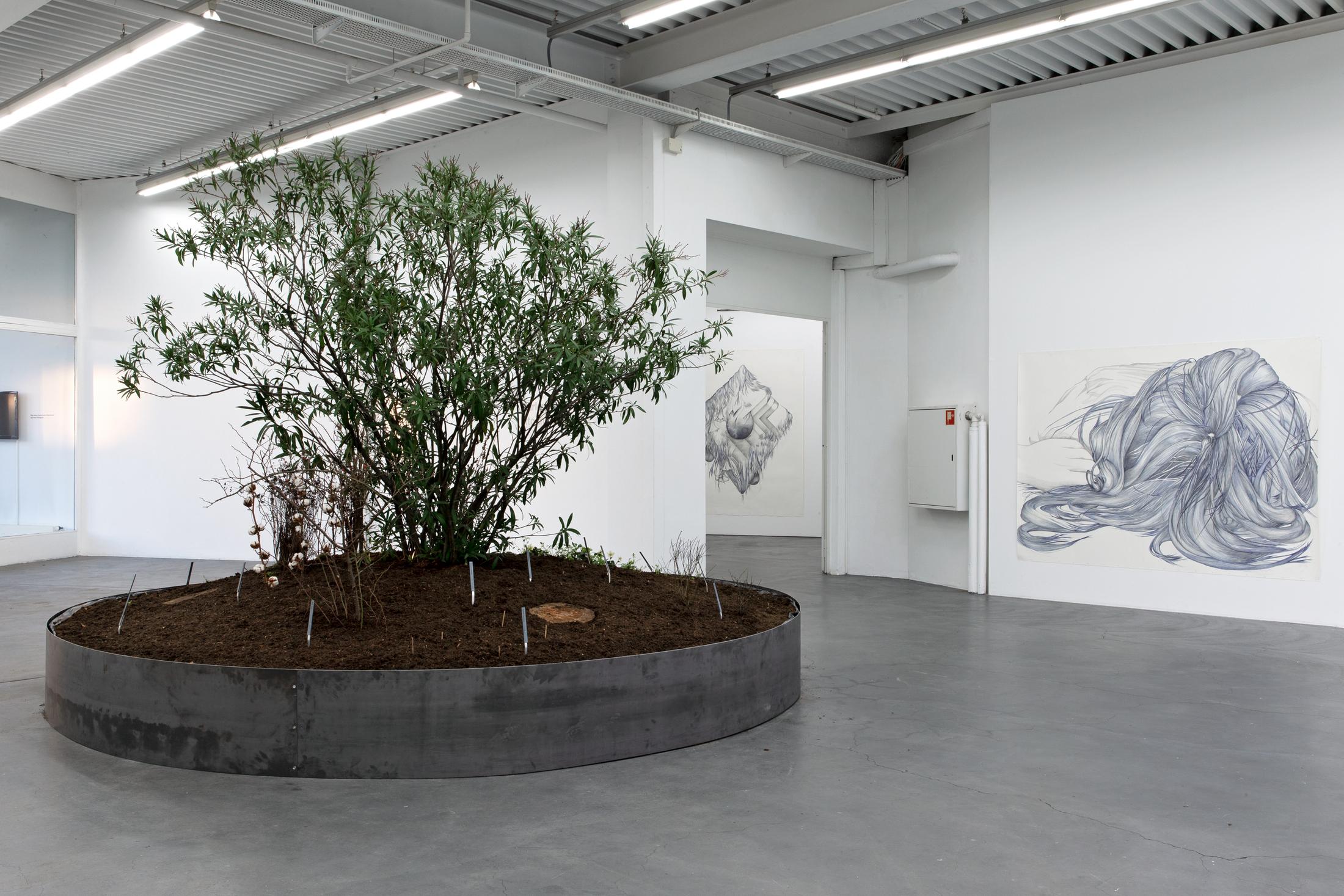
Exhibition View Marlene McCarty Soloshow «Into the Weeds; view on Into the Weeds, 2019 / Devil’s Snare, Male Pattern Baldness, Sag, Modern Mastery, Tumor or Goiter or Mammilla, Hell’s Bells, 2019 / “14”(2), 2014» at Kunsthaus Baselland, Muttenz, 2020 / Photo: Gina Folly / Courtesy: the artist
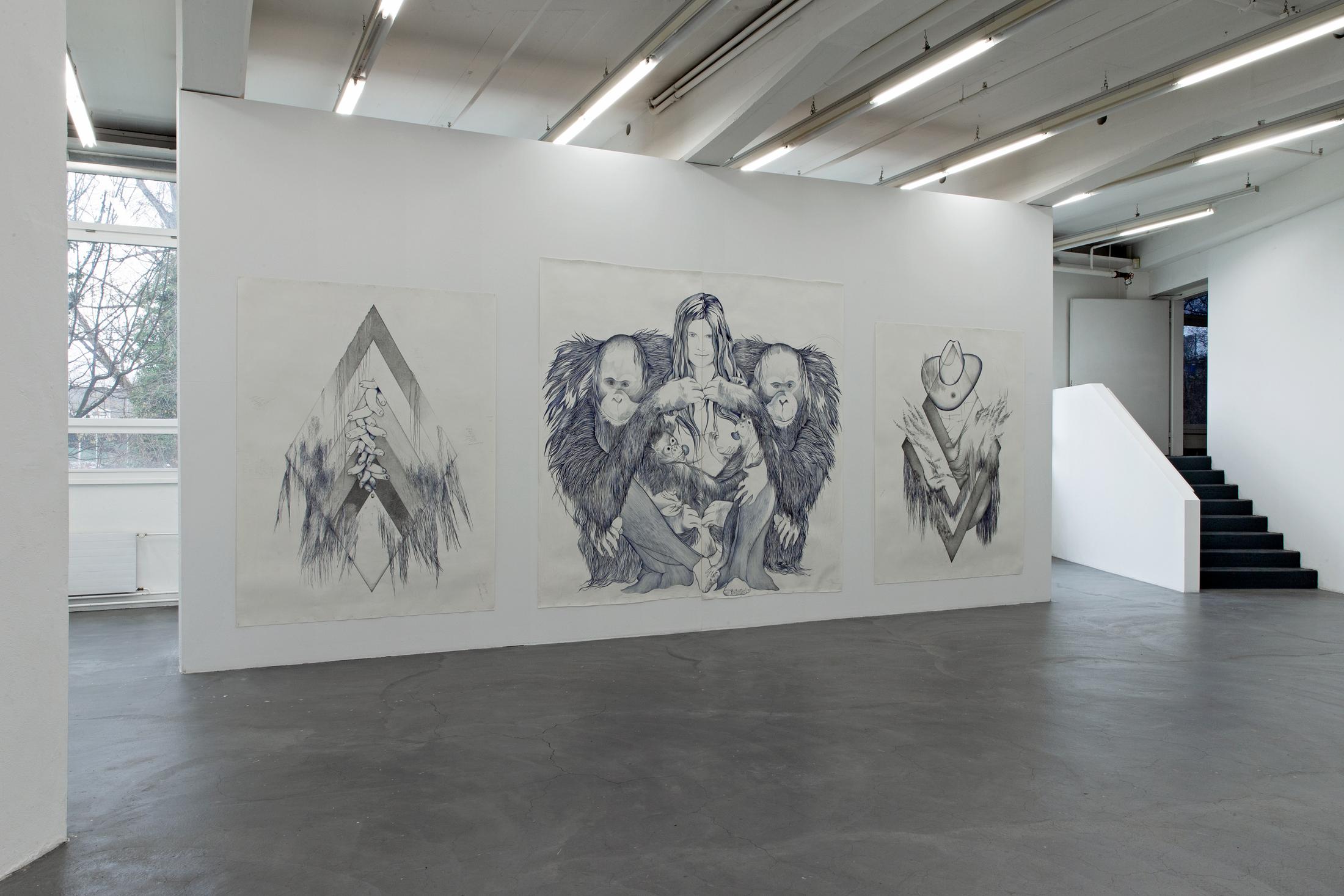
Exhibition View Marlene McCarty Soloshow «Into the Weeds; view on Invocation, Mutton, Escutcheon with Chevron, Rosary Pea, Body Odor, Benediction and All the Good They’d Do, 2019 / GROUP 3 (Tanjung Putting, Borneo. 1971), 2007 / Spare Tire, Sputter, Slinger, Spurt, Chasteberry, Monk’s Pepper, Yee Haw, 2019» at Kunsthaus Baselland, Muttenz, 2020 / Photo: Gina Folly / Courtesy: the artist
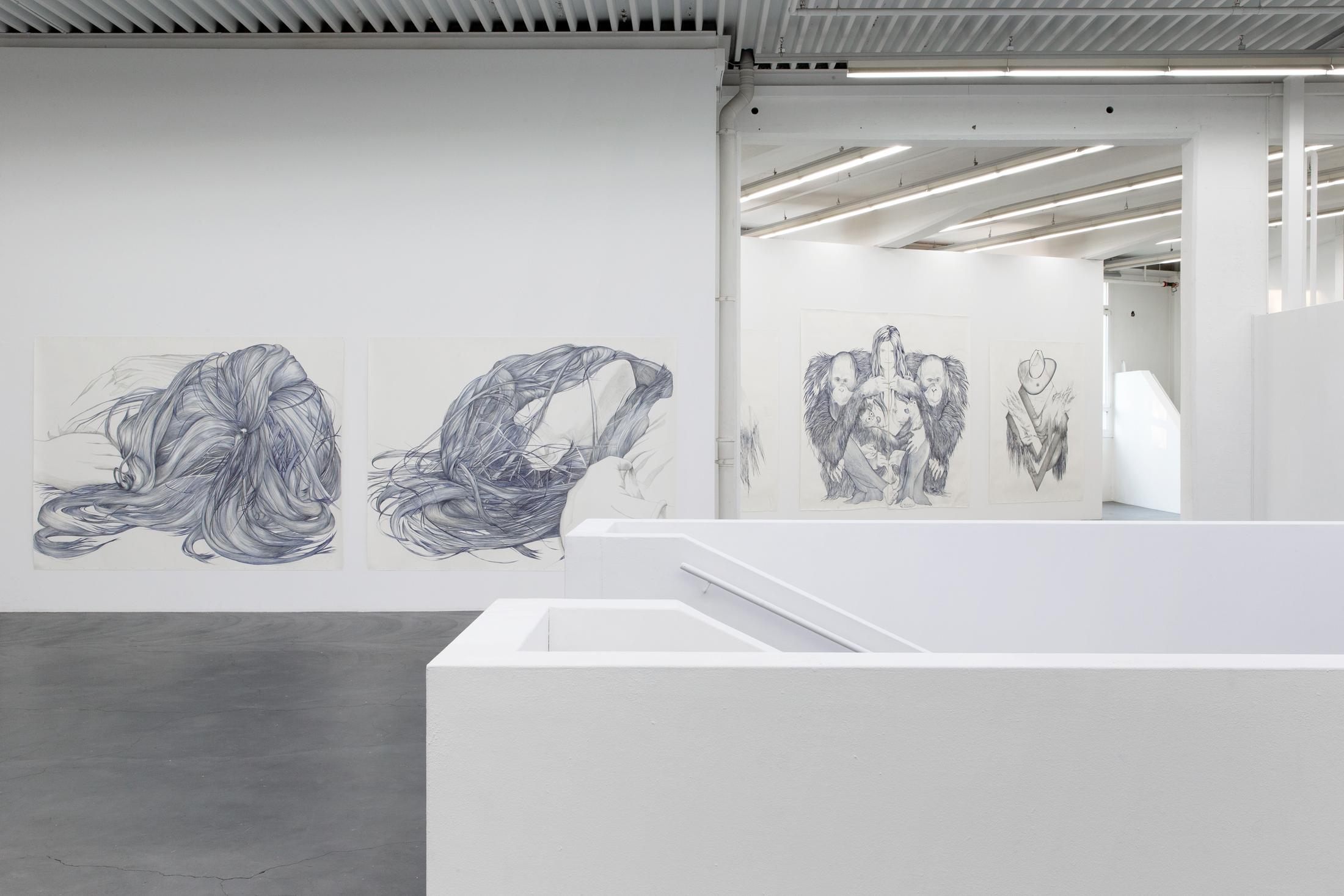
Exhibition View Marlene McCarty Soloshow «Into the Weeds; view on “14”(2) / “14”(4), 2014» at Kunsthaus Baselland, Muttenz, 2020 / Photo: Gina Folly / Courtesy: the artist and Sikkema Jenkins & Co. Gallery
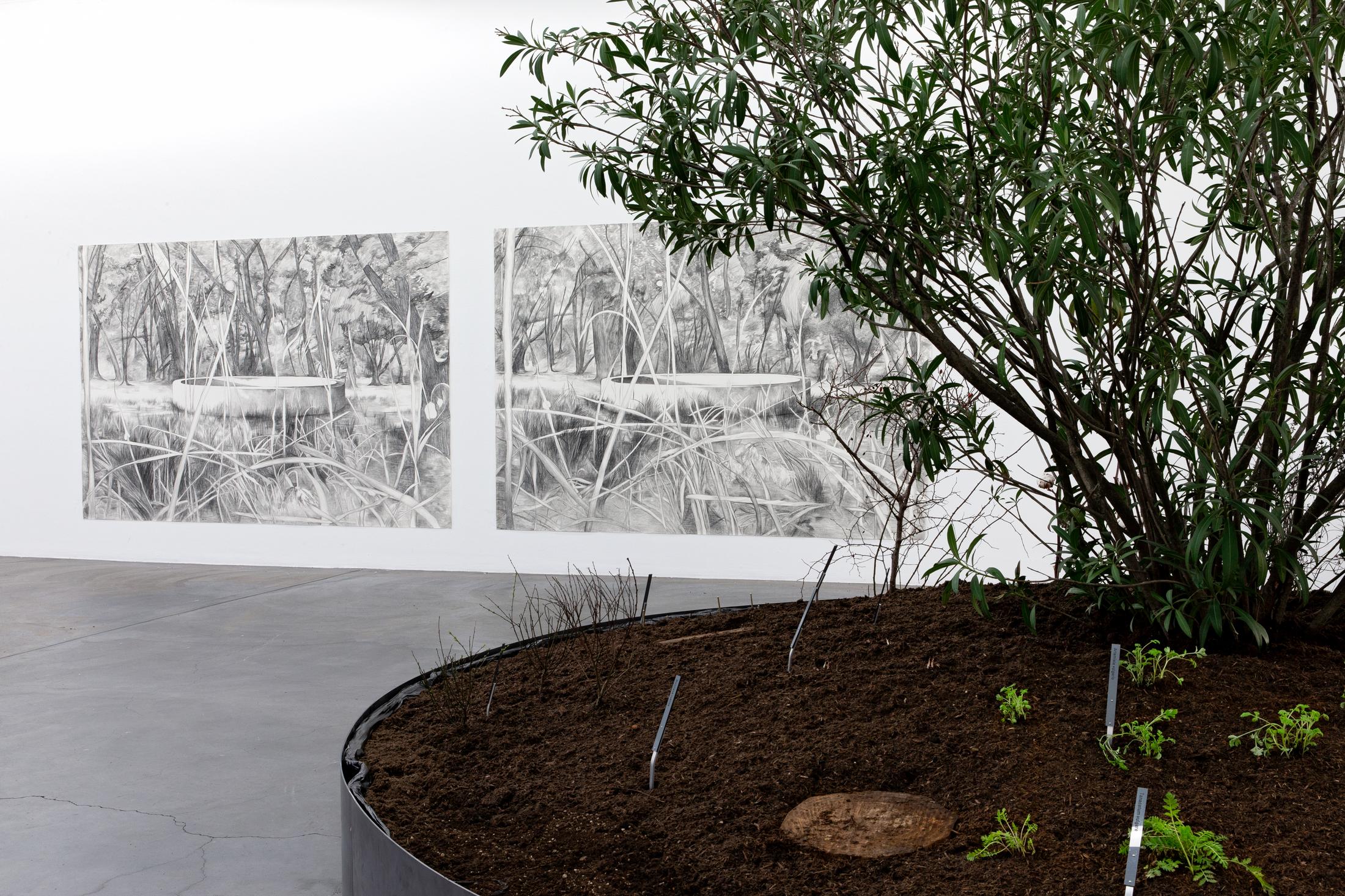
Exhibition View Marlene McCarty Soloshow «Into the Weeds; view on Hearth 2 (China Camp 2009, China Camp 1975), 2010» at Kunsthaus Baselland, Muttenz, 2020 / Photo: Gina Folly / Courtesy: the artist and Sikkema Jenkins & Co. Gallery
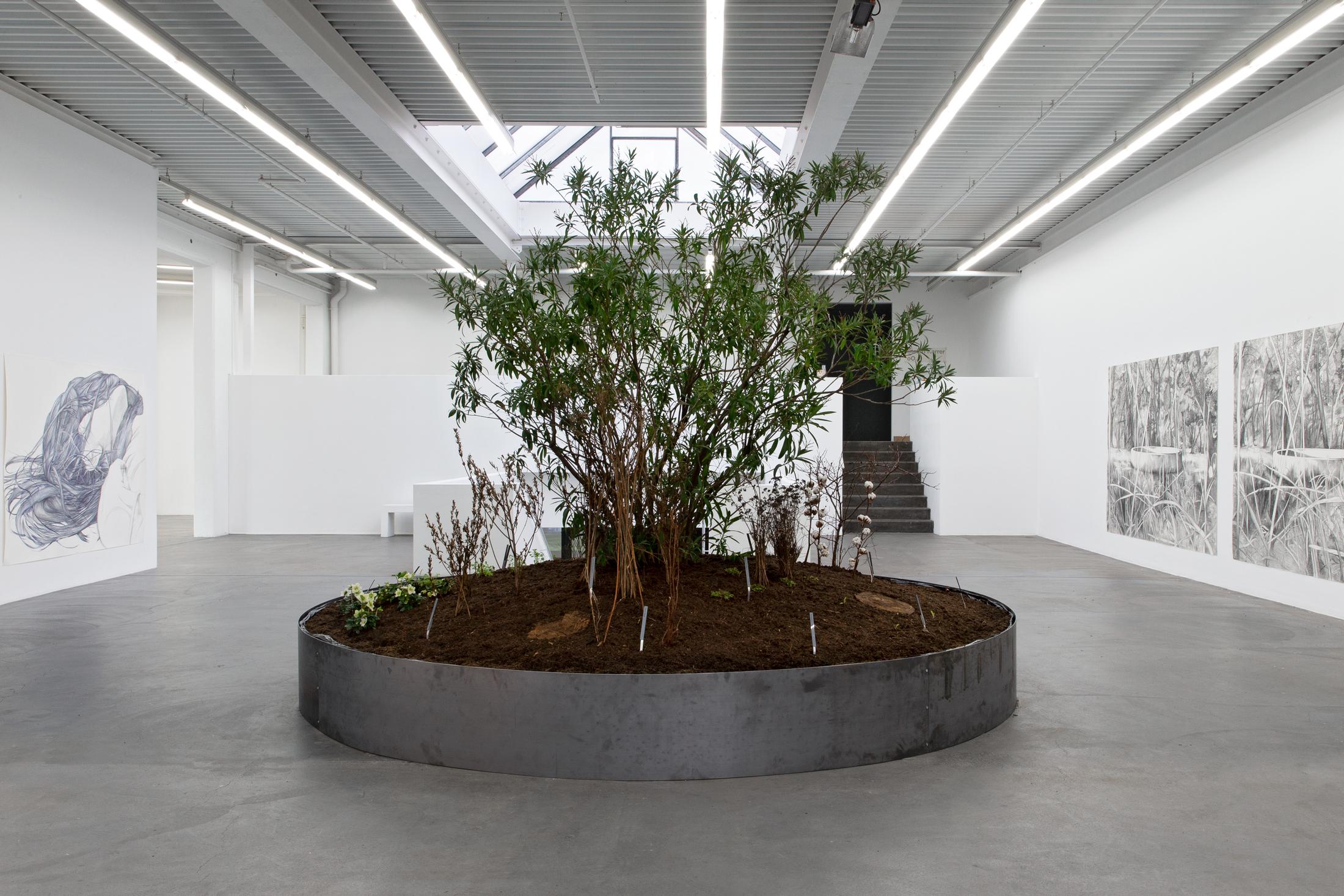
Exhibition View Marlene McCarty Soloshow «Into the Weeds; view on Into the Weeds, 2019» at Kunsthaus Baselland, Muttenz, 2020 / Photo: Gina Folly / Courtesy: the artist
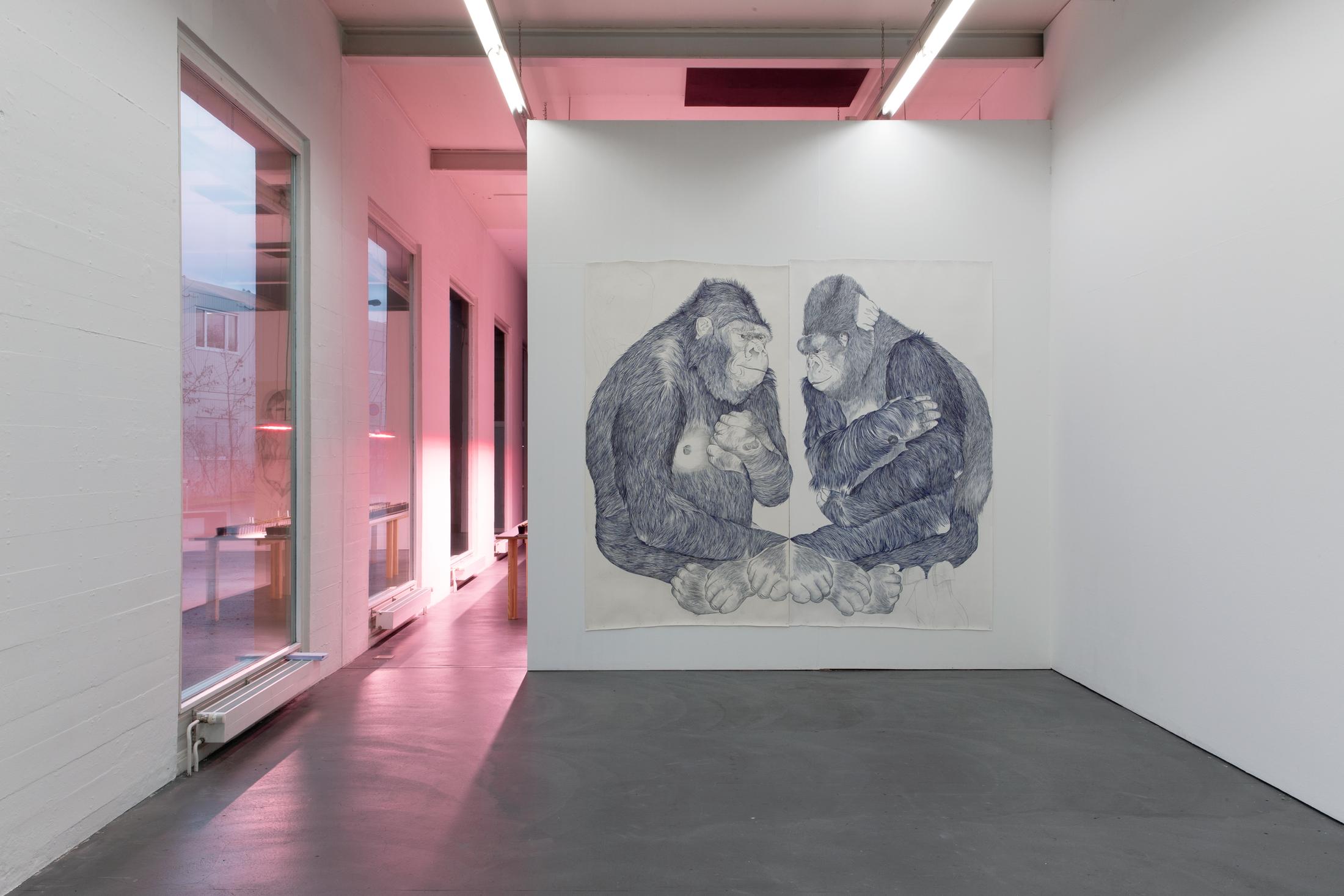
Exhibition View Marlene McCarty Soloshow «Into the Weeds; view on GROUP 10.3 (Sorry.Baby.), 2008» at Kunsthaus Baselland, Muttenz, 2020 / Photo: Gina Folly / Courtesy: the artist
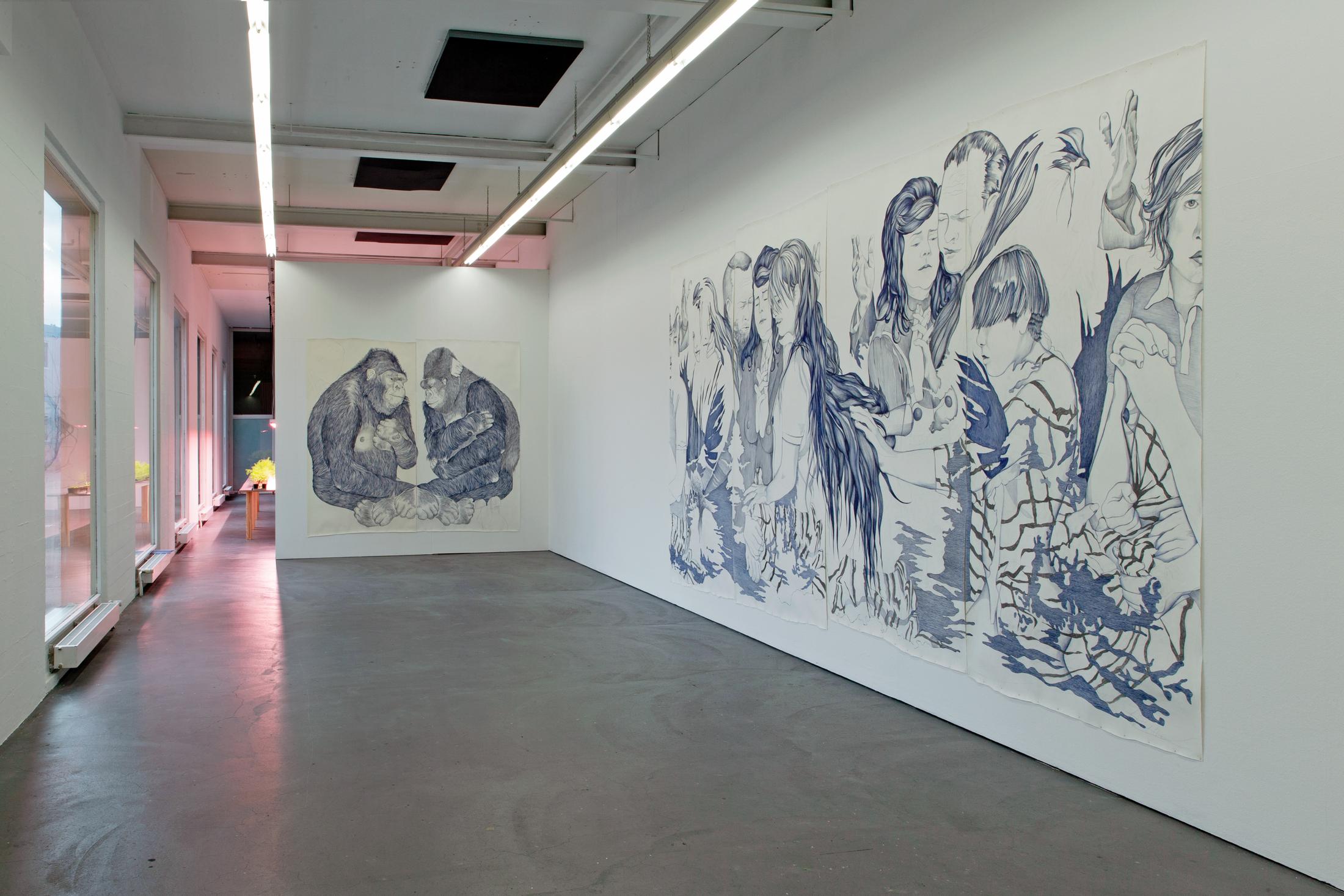
Exhibition View Marlene McCarty Soloshow «Into the Weeds; view on GROUP 10.3 (Sorry.Baby.), 2008 / GROUP 1.3 (Lititz, Pennsylvania. Sunday, November 13, 2005. 11:25 am), 2007» at Kunsthaus Baselland, Muttenz, 2020 / Photo: Gina Folly / Courtesy: the artist
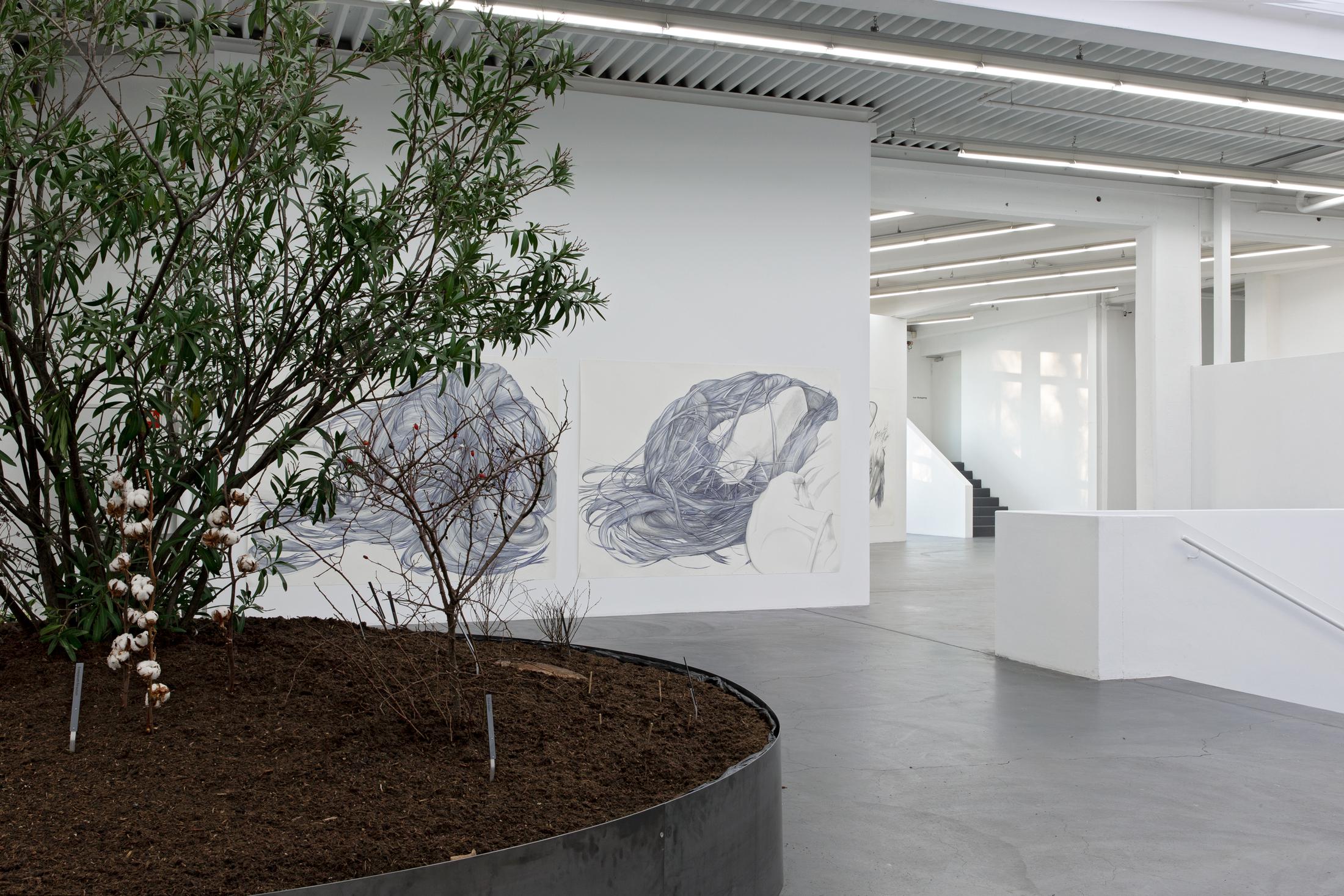
Exhibition View Marlene McCarty Soloshow «Into the Weeds; view on “14”(2) / “14”(4), 2014» at Kunsthaus Baselland, Muttenz, 2020 / Photo: Gina Folly / Courtesy: the artist and Sikkema Jenkins & Co. Gallery
The garden at the entrance to the Kunsthaus Baselland seems at first familiar and inviting. Tender little plants will continue to stretch up through the soil over the next few weeks. Despite the time of year, some of them will even grow to display the beauty of their blooms. And, the accompanying large-format — sometimes wall-sized — drawings by the artist Marlene McCarty also seem, at first glance, to reflect the fascination and beauty of humans and nature. But it wouldn’t be a McCarty exhibition without differing levels and depths of meaning unfolding beyond this.
For decades the artist, who lives in New York but has close ties to Basel, has used humble yet direct materials such as graphite pencils or ballpoint pens to probe controversial social issues. In her vast series and cycles of drawings, which have grown constantly since the 1980s, the artist’s gaze — and therefore that of the viewer — through topics of the contemporary, but also social abysses seems to penetrate everything. Layer after layer is meticulously revealed, uncovered, as if with a scalpel, passing through textiles, surfaces, naked skin, from the superficial to the profound.
Journeying through the various levels, human knowledge is shown to be animalistically unpredictable and dangerous, while the animal itself is revealed to be deeply human. The exhibition at the Kunsthaus is thus framed by a narrative that has been a preoccupation of Marlene McCarty’s work since the mid-1990s: the story of a teenager living in America, Marlene Olive, who — as a tragic act of rebellion – killed her mother and became an accomplice in the killing of her beloved father, not unlike a Greek tragedy, this crime story mirrors for McCarty the arduous and not always successful passage from socially constructed limitations to emancipation.
McCarty’s topics could hardly be more urgent today, ranging from social and sexual inequality, to discussions of gender and trans-biology. In her recent work, McCarty has focused on nature in greater detail. To this end, a large plant kingdom has been constructed in the Kunsthaus with the help of the Merian Gardens team. On the one hand, this garden takes up floral motifs of her current drawings, but on the other, it more firmly represents how the artist works. In her works she does not merely describe, document, or narrate, but instead facilitates an immediacy and a directness through the act of drawing — which creates a reality in itself.
The garden does not invite the visitor to linger, but rather brings plants together in a unique way — similar to a research project. Plants which, as McCarty has found in her research, have historically been tools for women’s emancipation as well as emissaries of a (secret) female knowledge; for example, some plant seeds were used against unwanted pregnancies, or even — due to extreme toxic effects — as a last resort for self-defense.
But Marlene McCarty is not an artist who merely looks back on history. Once again, she manages to explicitly link current discussions concerning the distribution of power and knowledge in today’s society including it’s use of violence against the disempowered with the acquisition, cultivation, and growth of awareness concerning nature. Marlene McCarty not only renders visible the unadorned and grotesque nature of a contemporary society whose cultivated state can generally be called into question. Above all, she demonstrates that the acquisition of knowledge, the cultivation of it through detailed awareness and diverse processes of understanding concerning circumstances other than one’s own — can give one meaning and a sense of location, which in turn can generate sustainable action.