Emma Jung & Rebecca Ackroyd at Cabaret Voltaire
Duo Show «Tage und Nächte», May 17 until November 2, 2025
Artists
Institution
Location
Download
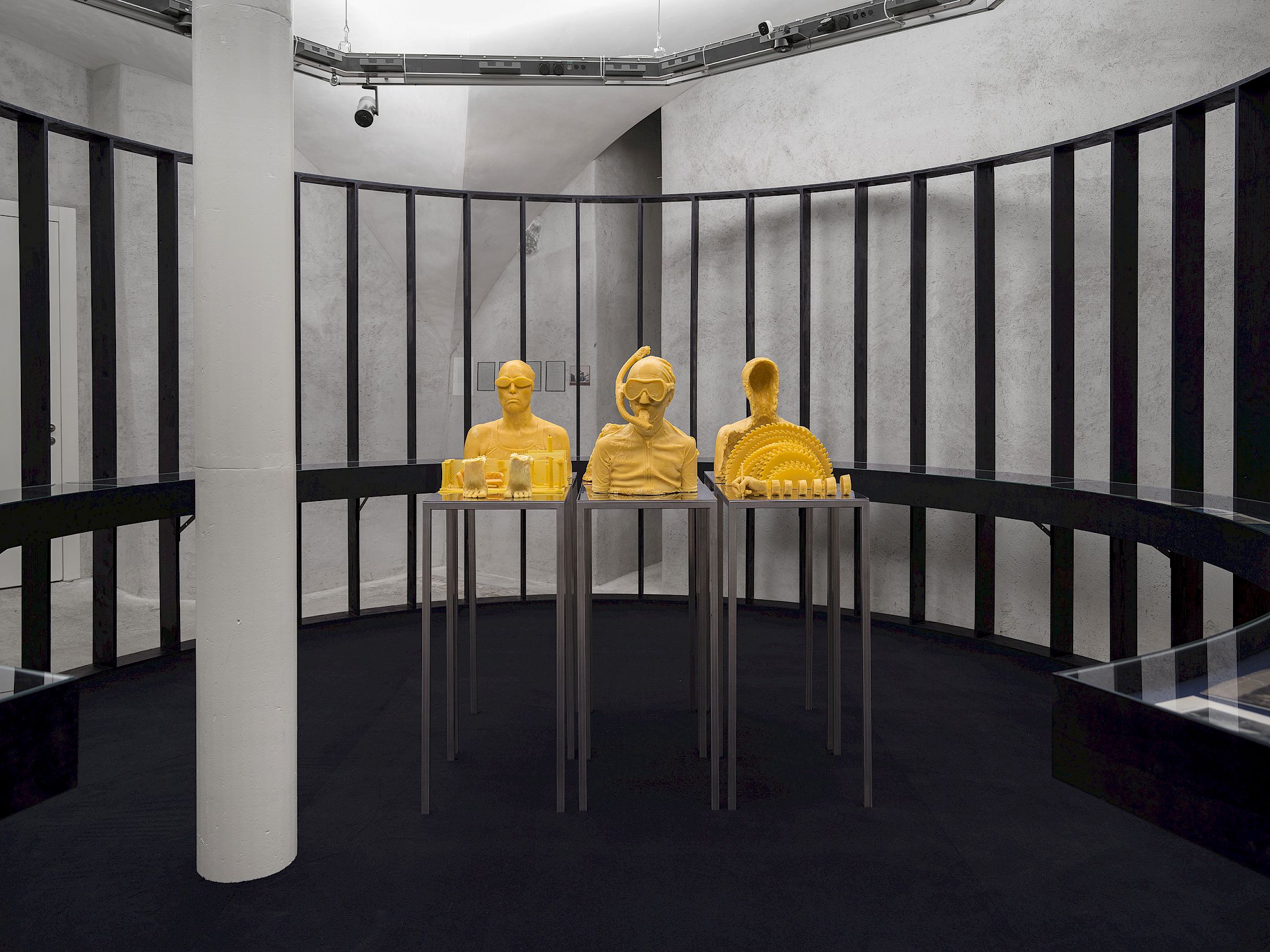
Exhibition view Emma Jung & Rebecca Ackroyd «Tage und Nächte», Cabaret Voltaire 2025; Rebecca Ackroyd, The World as I feel it (Series), 2025. Photo: Cedric Mussano. Courtesy: the artist
In the Vaulted Cellar of the Cabaret Voltaire
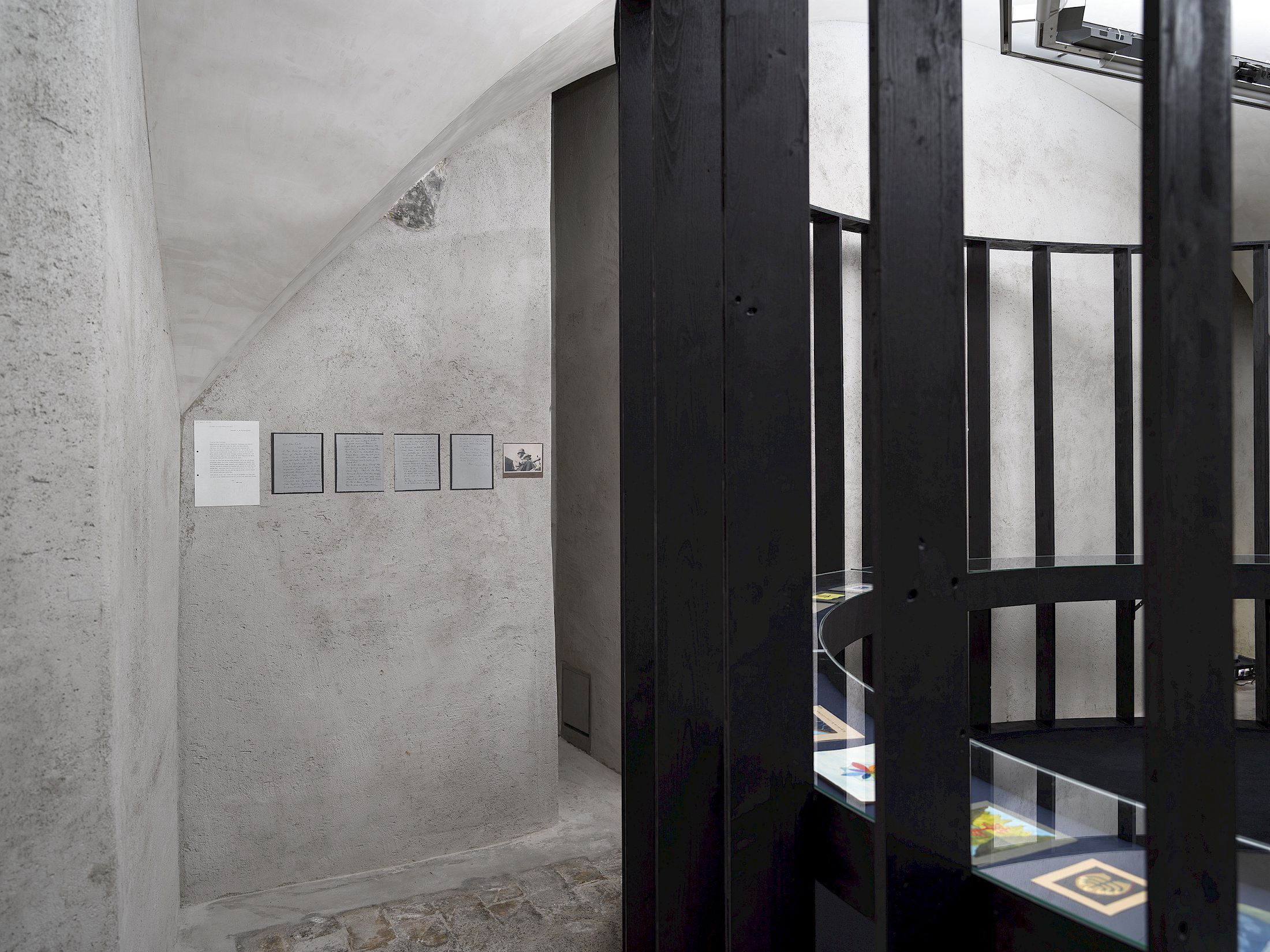
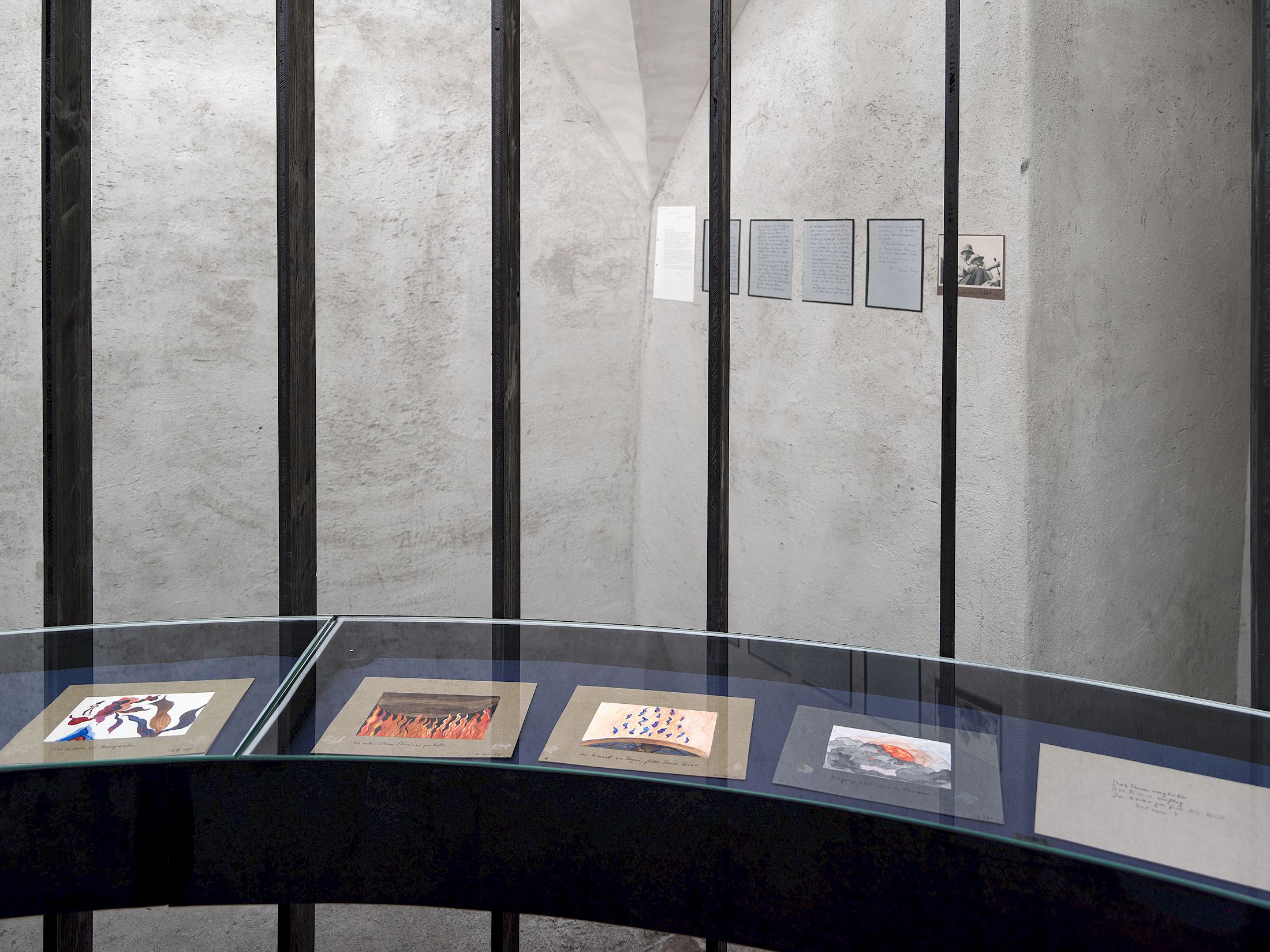
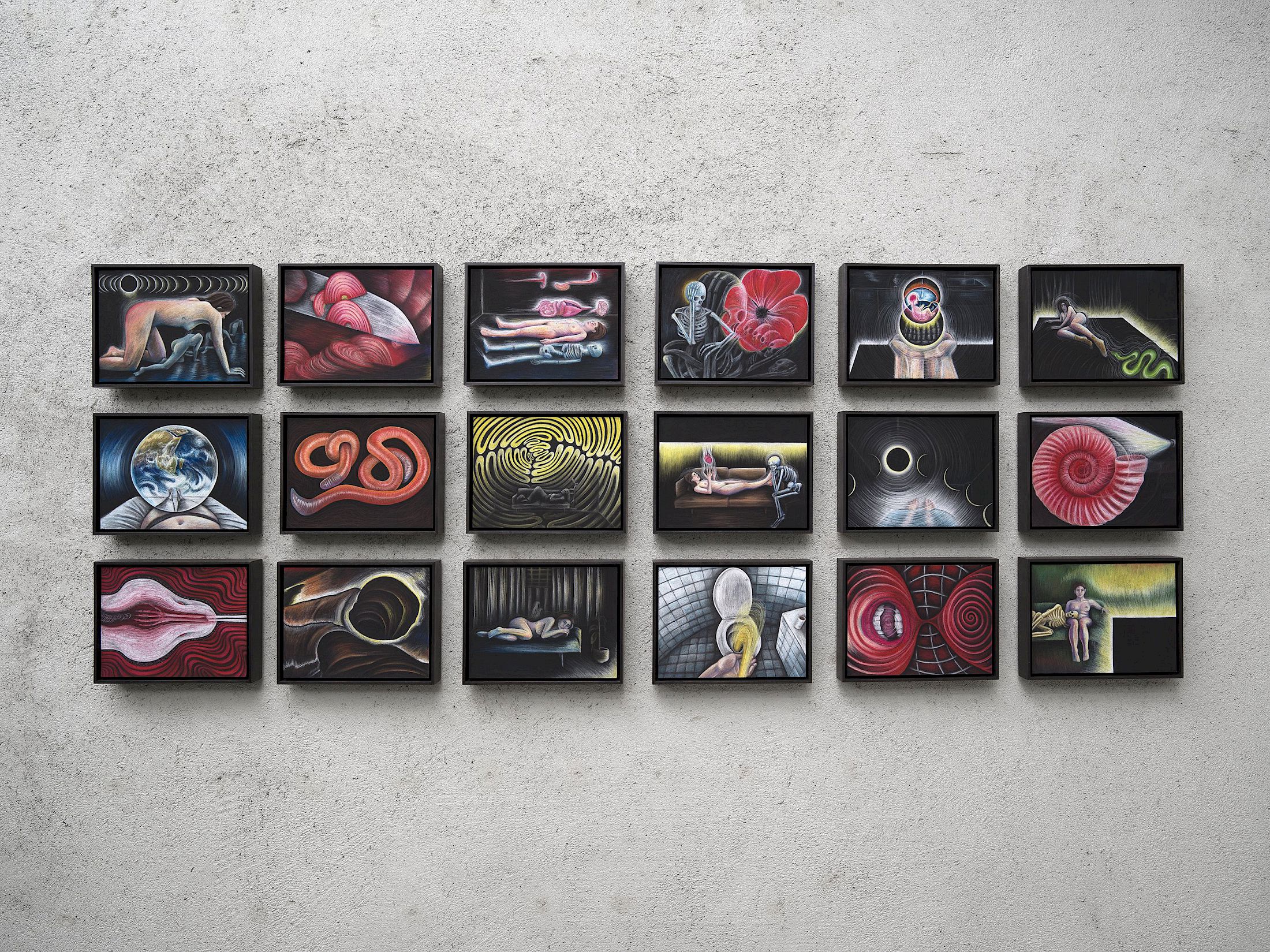
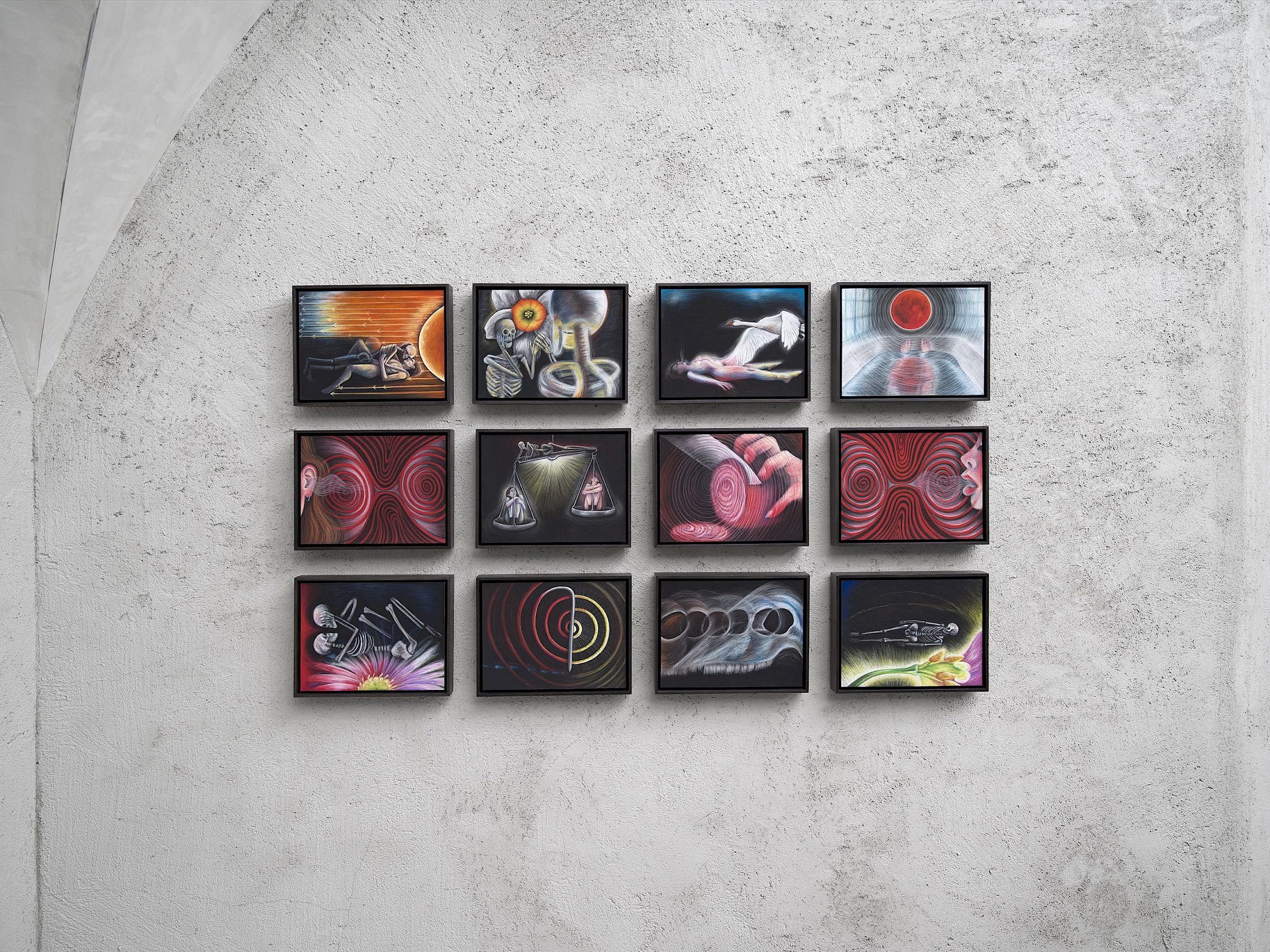
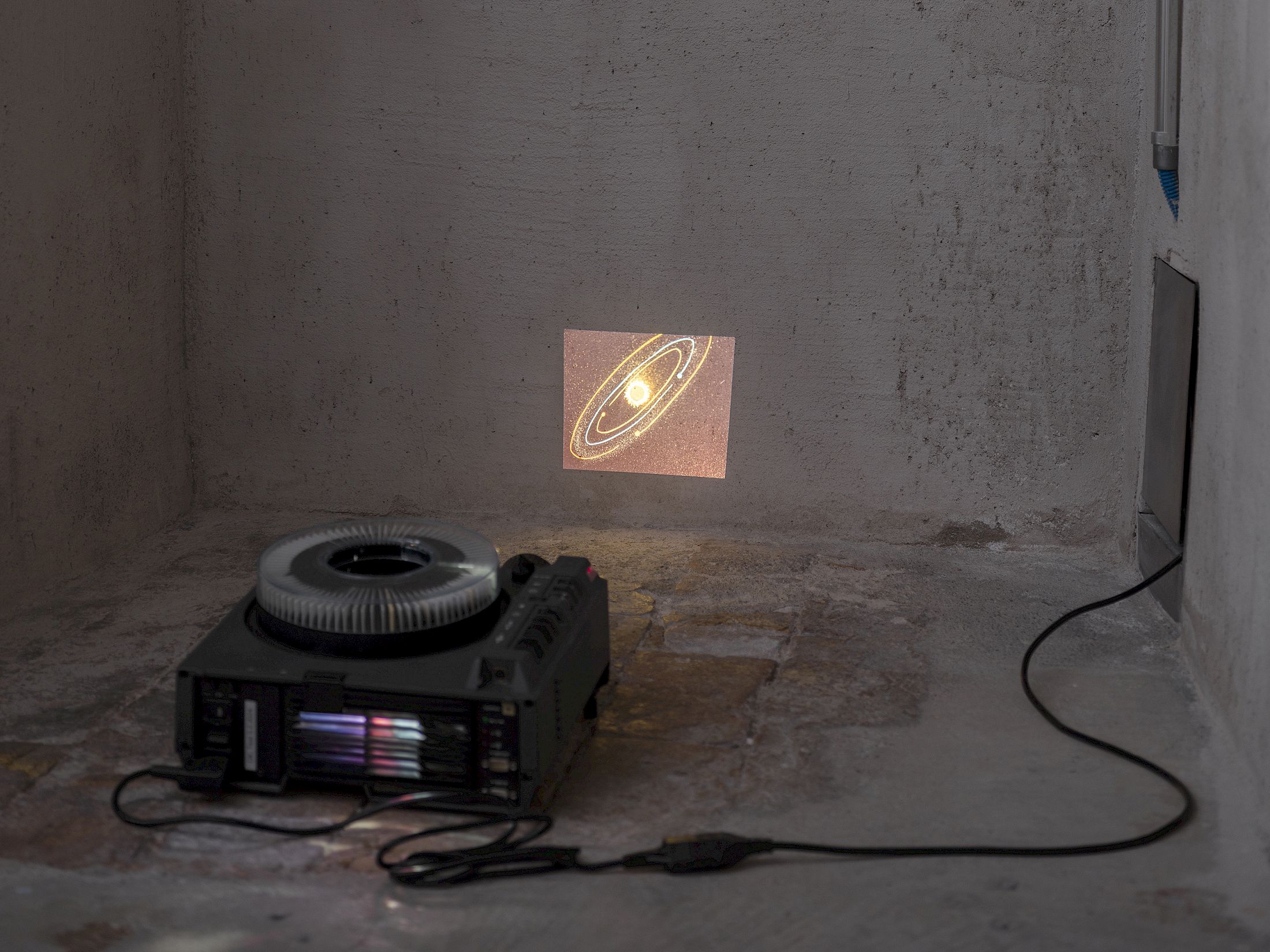
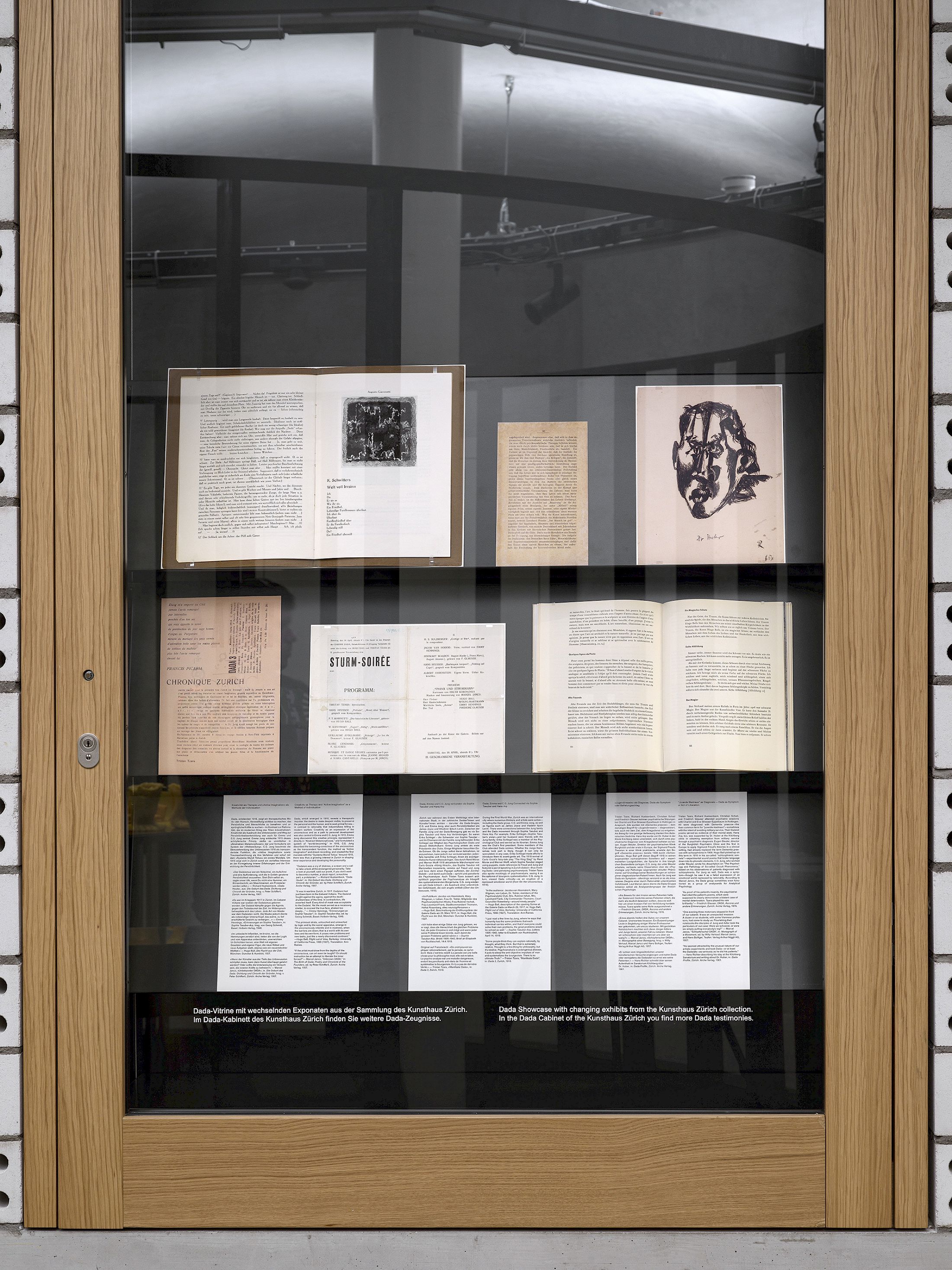
In the Vaulted Cellar of the Cabaret Voltaire, two cosmologies meet—personal inner worlds that also encompass collective and universal dimensions. The space has been transformed for this exhibition by a central wooden rotunda, specially constructed to provide both an internal and external perspective on the exhibits presented. Painted black, the structure stands as a dominant shadow in the room—a reduced architectural construction reminiscent of an ancient temple. It serves as both a viewing structure and an embodiment of a psychic space, permeated by symbolism, fragmented dreams, and flashing visions—steeped in the search for wholeness. The rotunda feels at once familiar and distant. Within this setting unfolds the previously unseen world of Emma Jung (1882–1955), presented in dialogue with new work series by contemporary artist Rebecca Ackroyd (*1987). On view from Emma Jung are drawings, paintings, poems, and several photographs—originals from the Jung family archive—displayed in central vitrines. These are complemented by copies of her “system” of “world-becoming,” letters, and another photograph along the vaulted walls. Rebecca Ackroyd presents thirty drawings arranged in a grid on the masonry walls, wax sculptures in the center of the rotunda, and a slide installation in the niche near the entrance. Rebecca Ackroyd represents a contemporary artistic approach to exploring the human psyche, while Emma Jung’s perspective is rooted in the early twentieth-century tradition of Analytical Psychology from the “Zurich school,” which was founded by her husband Carl Gustav (C.G.) Jung. Both Jung and Ackroyd can be situated in the tension between creativity and psychological development. The focus is on the question of personal records as artistic, analytical, or spiritual practice—an approach that is also visible in Emma Jung’s contemporaries in Switzerland, such as Emma Kunz and Olga Fröbe-Kapteyn, though more explicitly linked to spirituality and healing. The exhibition is inspired by a historical thread: connections exist between Dada—whose birthplace is the Cabaret Voltaire—and Analytical Psychology, as shown in the large wall vitrine. The Dada group was loosely connected to Emma and C.G. Jung’s circle through Sophie Taeuber and Hans Arp. Both Dada and the Jungs sought ways to access the unconscious, considered creativity a therapeutic moment, and viewed artistic expression as a mirror of psychological states.Emma Jung: Forgotten Analyst
While C.G. Jung is world-renowned and celebrates his 150th birthday this year, Emma Jung remains mostly in the background—known primarily as his wife and the mother of their five children. This exhibition aims to finally give her the recognition she deserves as an analyst in her own right—aligned with the recently published Dedicated to the Soul (Princeton University Press, 2025), the first comprehensive study of her work. Emma Jung was far more than just her husband’s intellectual partner and supporter. She worked as a research assistant at the Burghölzli psychiatric clinic, contributed ideas and was an active participant in Jung’s inner circle, and became the first president of the Psychology Club in 1916. As early as 1910, she was part of the Zurich group of the Psychoanalytic Society, which, after the rift between Sigmund Freud and C.G. Jung due to differences over the theory of libido, was renamed the “Society for Analytical Psychology.” In 1913, she presented her first paper to peers—a psychological interpretation of the fairy tale “The Two Brothers.” She made an independent contribution to the development of Analytical Psychology. Her special focus was the concept of individuation—the inner process through which one integrates unconscious aspects to become a more whole and conscious self. Key themes in her work included the dynamics of “Animus and Anima”—the contrasexual aspects within each psyche—as well as the symbolism of the Grail legend as a metaphor for the inner spiritual journey and quest for psychic wholeness. Her work sought to resolve dualities such as culture and nature, good and evil, and gender identities. Equally important to her was engaging with psychological questions from a female perspective. Starting in 1921, she organized so-called “women’s evenings” with Erika Schlegel and Susi Trüb, where women could reflect and discuss psychological topics among themselves. The fact that Emma Jung was held in high regard in professional circles is evidenced by her extensive correspondence with colleagues and her participation in the Weimar Congress—among a distinguished group of prominent psychologists of her time.Rebecca Ackroyd: The World as I see it
More than a hundred years later, Rebecca Ackroyd takes up similar fields of interest with her new series, including The World as I see it, continuing a lifelong engagement with themes such as identity, embodiment, memory, and the boundaries between physical and psychological space. The thirty small-format drawings—symbolic and collage-like in their connections—express a deep fascination with inner imagery. Unlike her usually large-scale works depicting close-ups of body fragments or isolated symbols such as spirals, these portray entire scenes. They are intimate, almost diary-like records of dreams and inner images, created not in the studio but at home, alongside sessions in Analytical Psychology and Tarot readings. The drawings feature recurring motifs: water, spirals, skeletons, flowers. They are symbols of birth, transformation, and death—cyclical movements of life and layered processes of becoming. For the first time, the artist herself appears within these visual worlds. The intentionally small size of the drawings invites deeper engagement with the artist’s inner world.Emma Jung: Abstract Metamorphoses and World-Becoming
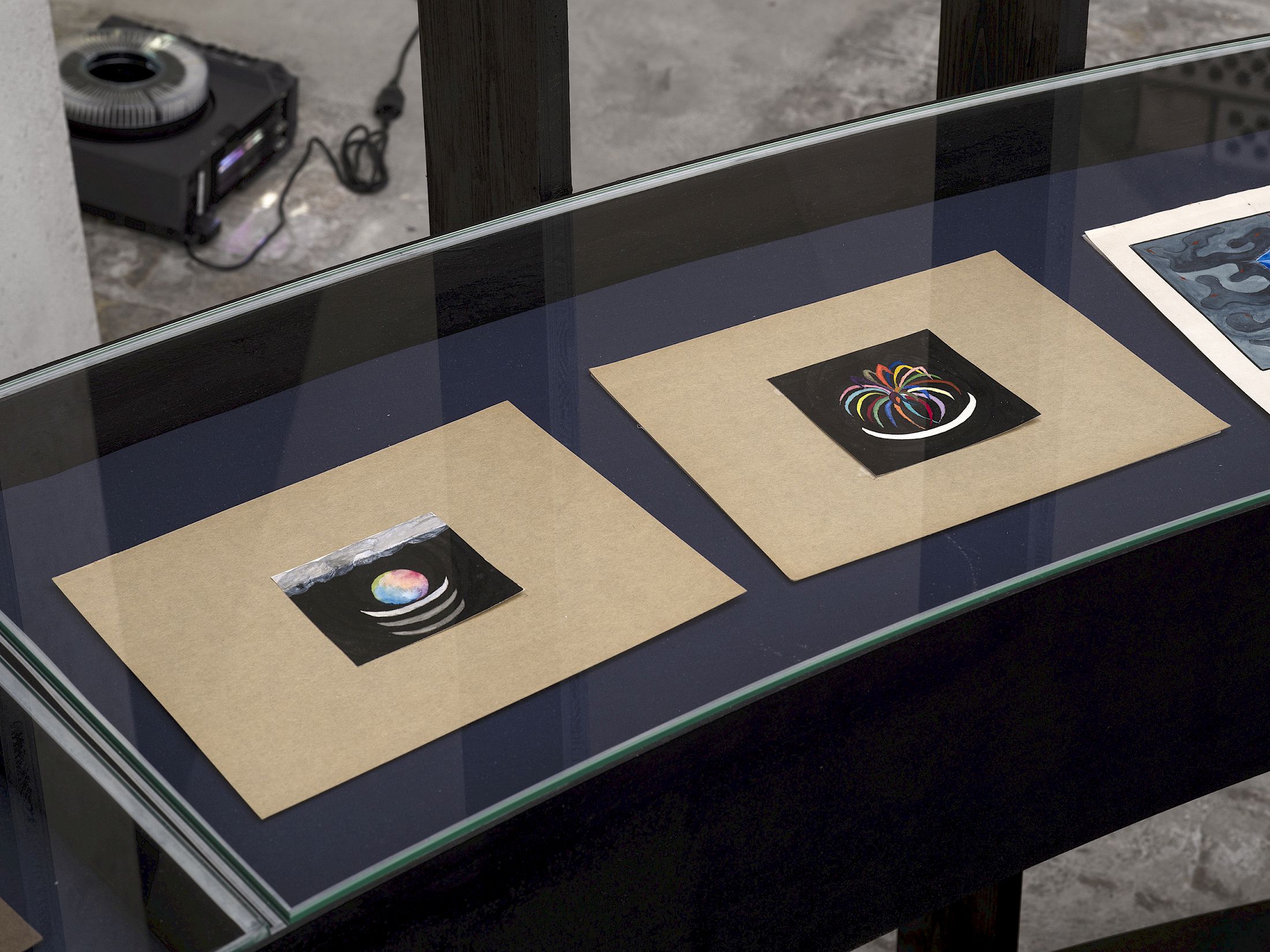
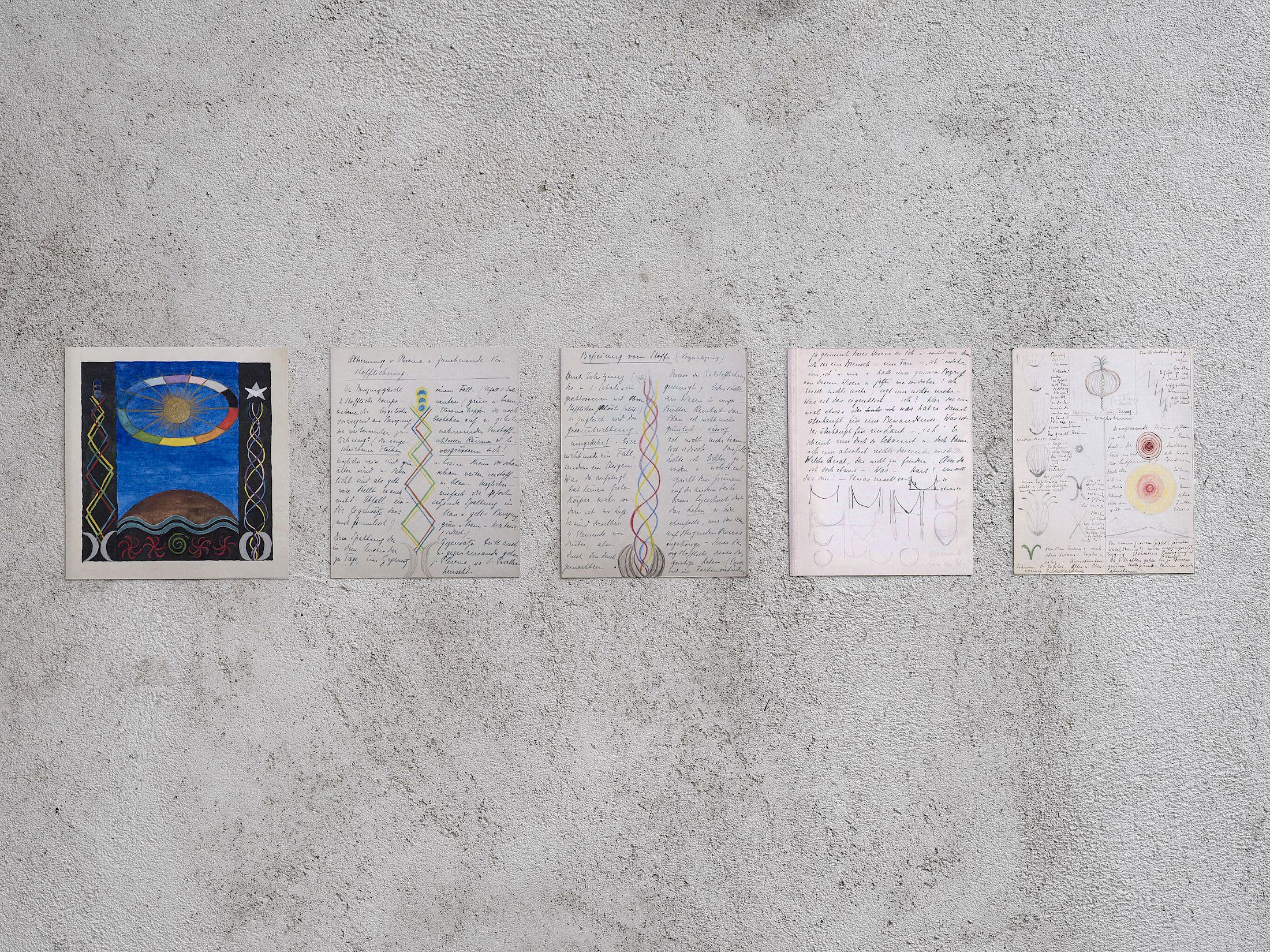
The rich symbolism in Emma Jung’s visual and poetic language arose from an intense inner process, especially during the years 1913–1919—coinciding with the Dada period in Zurich. During this time, both Emma and C.G. Jung searched for ways to make the unconscious visible: dreams, fantasies, inner images—not just through Freudian free association, but also through “amplifications”—an approach that examines unconscious material in depth and enriches it through religious, mystical, and mythological references. It was during this period that C.G. Jung created his famous “Red Book” and developed his method of “active imagination”—a dialogical process in which inner images, emotions, or impulses are consciously acknowledged and creatively processed. At the same time (or perhaps even earlier), Emma Jung was working on her own “Red Book,” a journal bound in marbled paper and leather where she recorded dreams and visions. She also illustrated her “system” or “world-becoming”: a personal cosmology connecting inner and outer, micro- and macrocosm, near and far. At the core of these works is the process of individuation—the psychological development through which a person becomes a more whole, conscious self by integrating their unconscious. Emma Jung’s individuative visual language is exemplified in her “Abstract Metamorphoses” (1917/18), in which she abstracts psychic transformation across several works: a crystal flower grows from a burned-out world. Other images show a girl (Jung herself?) appearing in blue before a large closed door, then before an open interior filled with birds, hybrid creatures, lava made of water, organic forms, and walls. These inner images, like the wall, also appear in her poems.Rebecca Ackroyd: The World as it is
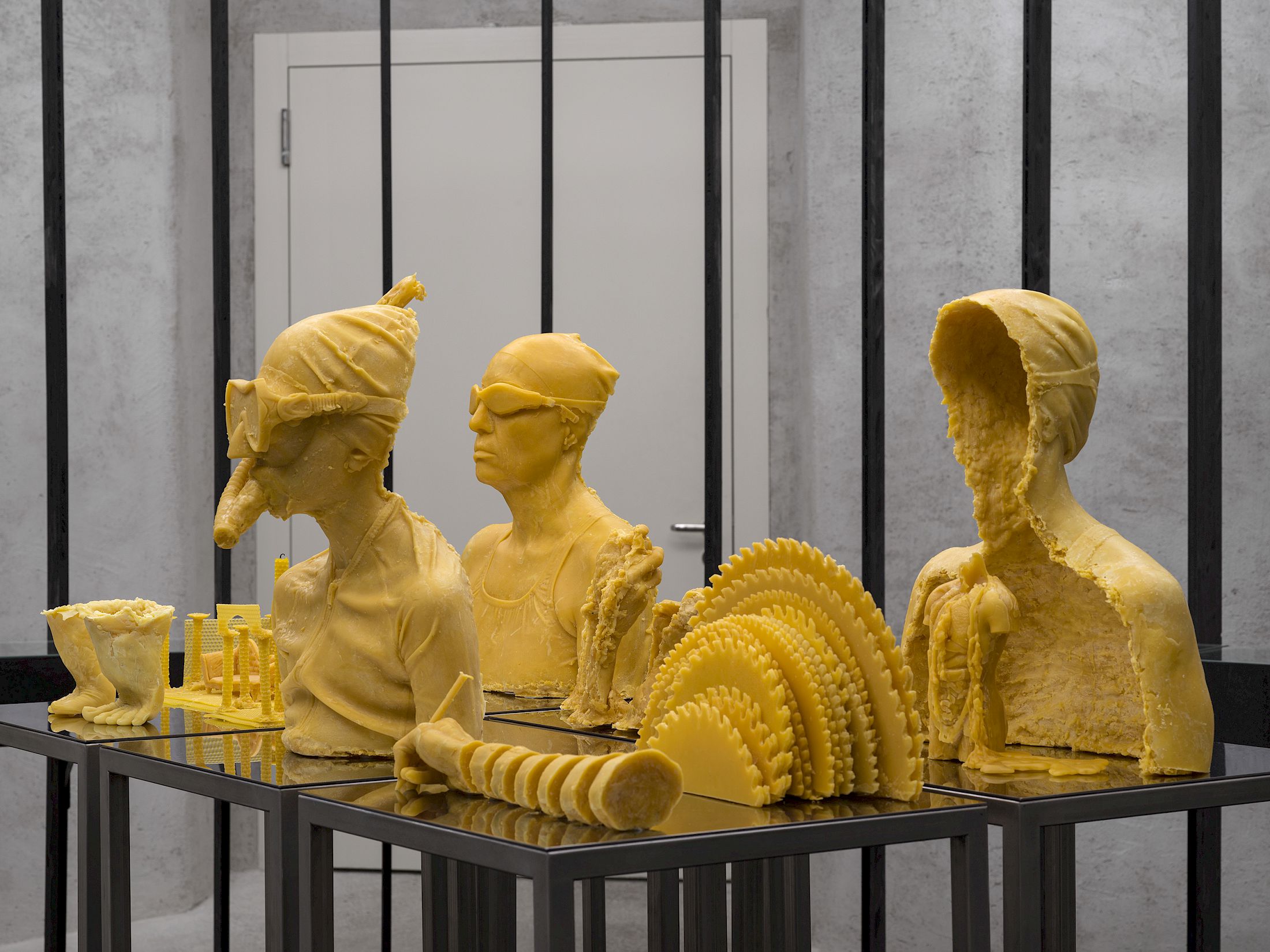
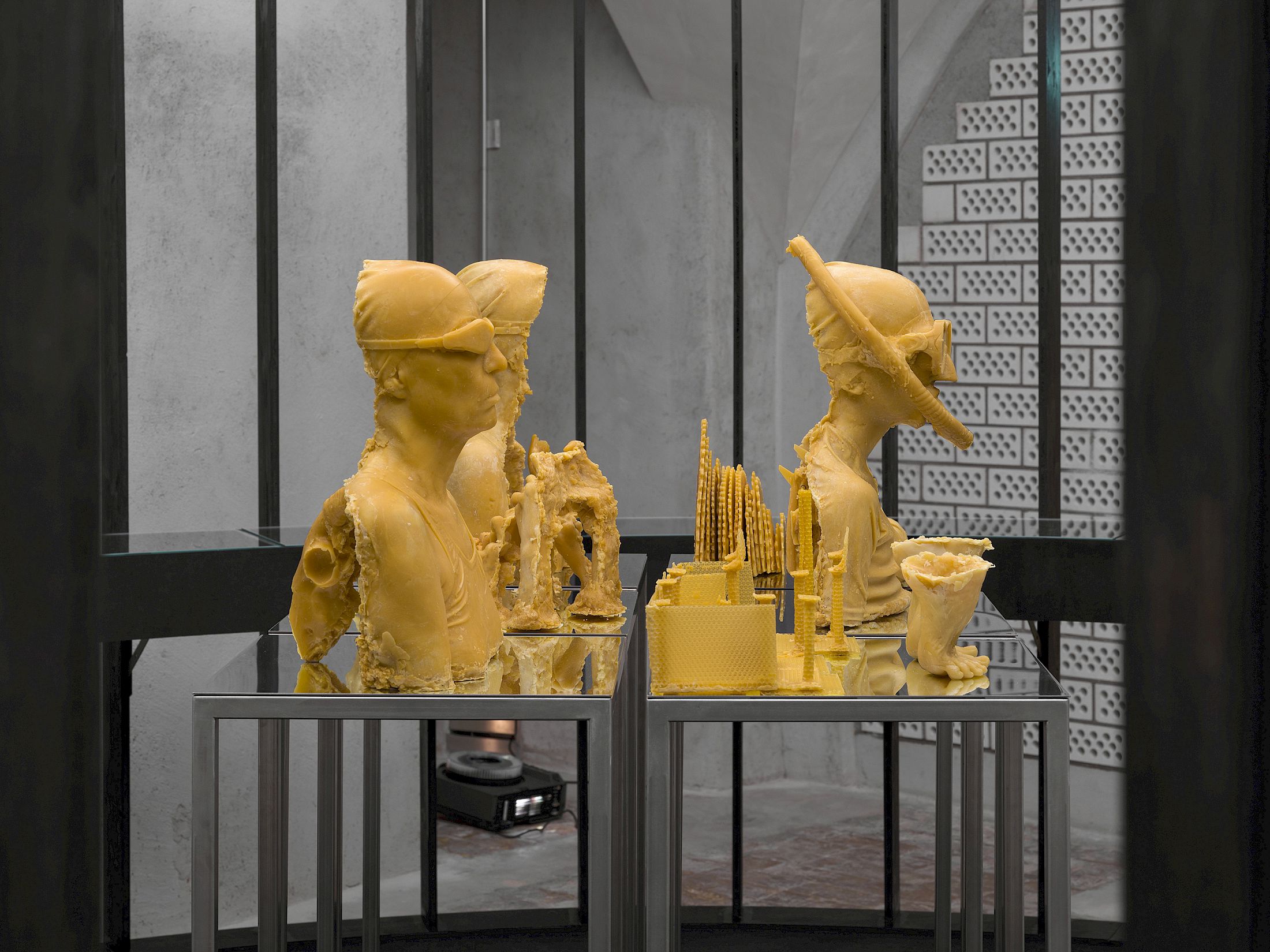
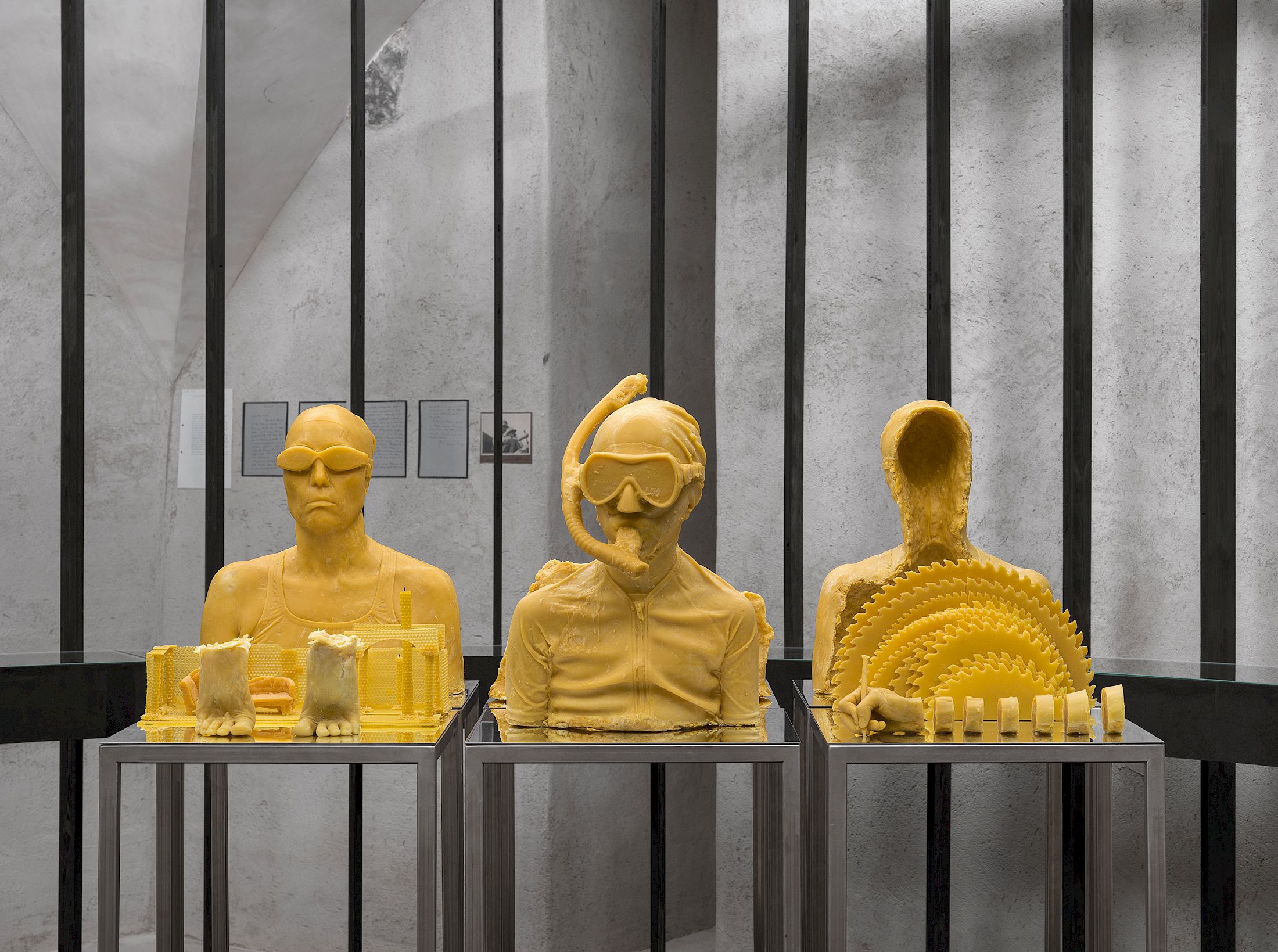
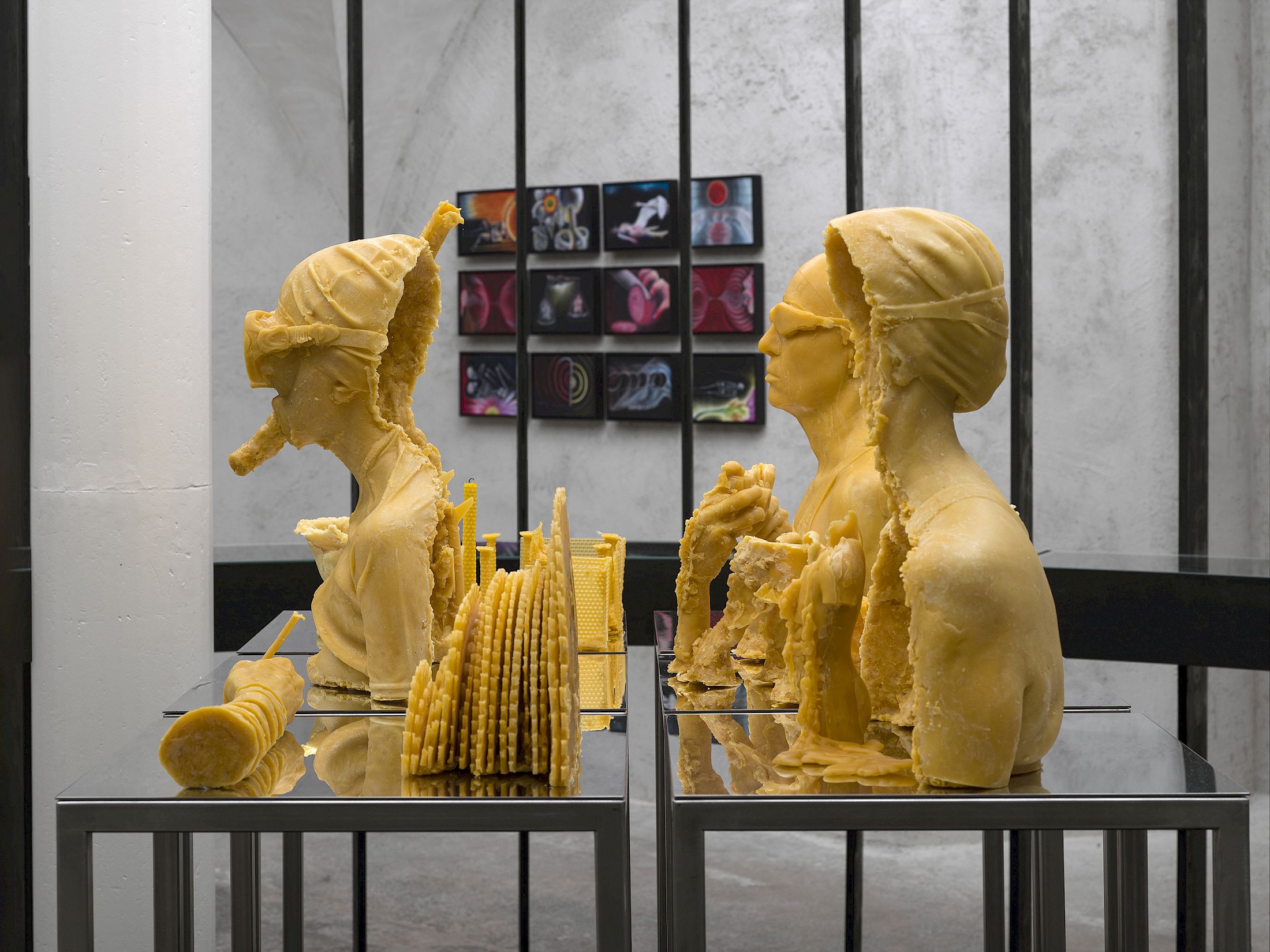
Rebecca Ackroyd’s drawings make dreams and inner images visible, too—often without the artist fully knowing how or why they are encoded within her psyche, or where the imagery comes from. This contrasts with her sculpture series The World as I feel it, which is based on real people and objects: divers, chainsaw blades, cameras, feet, a therapy couch from a dollhouse. Ackroyd wanted to reclaim these elusive images, to touch them, to give them real-life scale and form. She made molds using silicone and alginate, which she then cast in hot wax. The resulting pieces are compact and dense. Despite this, the fragmented and simultaneous experience of inner and outer life in the torsos brings the viewer back to the dreamlike and surreal. The diver casts of Ackroyd’s friend Barbara and her son are particularly striking. Swimming and water have long represented the unconscious in her work. The couch here may suggest a space of contemplation and reflection, while the chainsaw evokes the brutality of analysis. It also alludes to a lack of inner wholeness and simultaneously to the setting sun, while the camera stands for supposed objectivity. Alongside The World as I feel it and The World as I see it, The World as it is is also on view—a collection of images of outer space, medical textbook photographs, and personal archive materials. Unlike the drawings and sculptures, these are not inner images or artistic transformations but real representations. From bone structures and the human body to outer space—these are undeniably “things as they are,” yet they also reflect what we cannot fully grasp or see: our inner lives and the vastness of the universe down to the galaxies. The rhythmic clicking of the projector and the carousel function resonate with the wooden rotunda. The exhibition feels like a reservoir of conscious and unconscious images—sometimes tangible, sometimes slipping away. The familiar and the uncanny, desires and fears, longing and revulsion merge across the three bodies of work.Tage und Nächte
The title “Tage und Nächte” (Days and Nights)

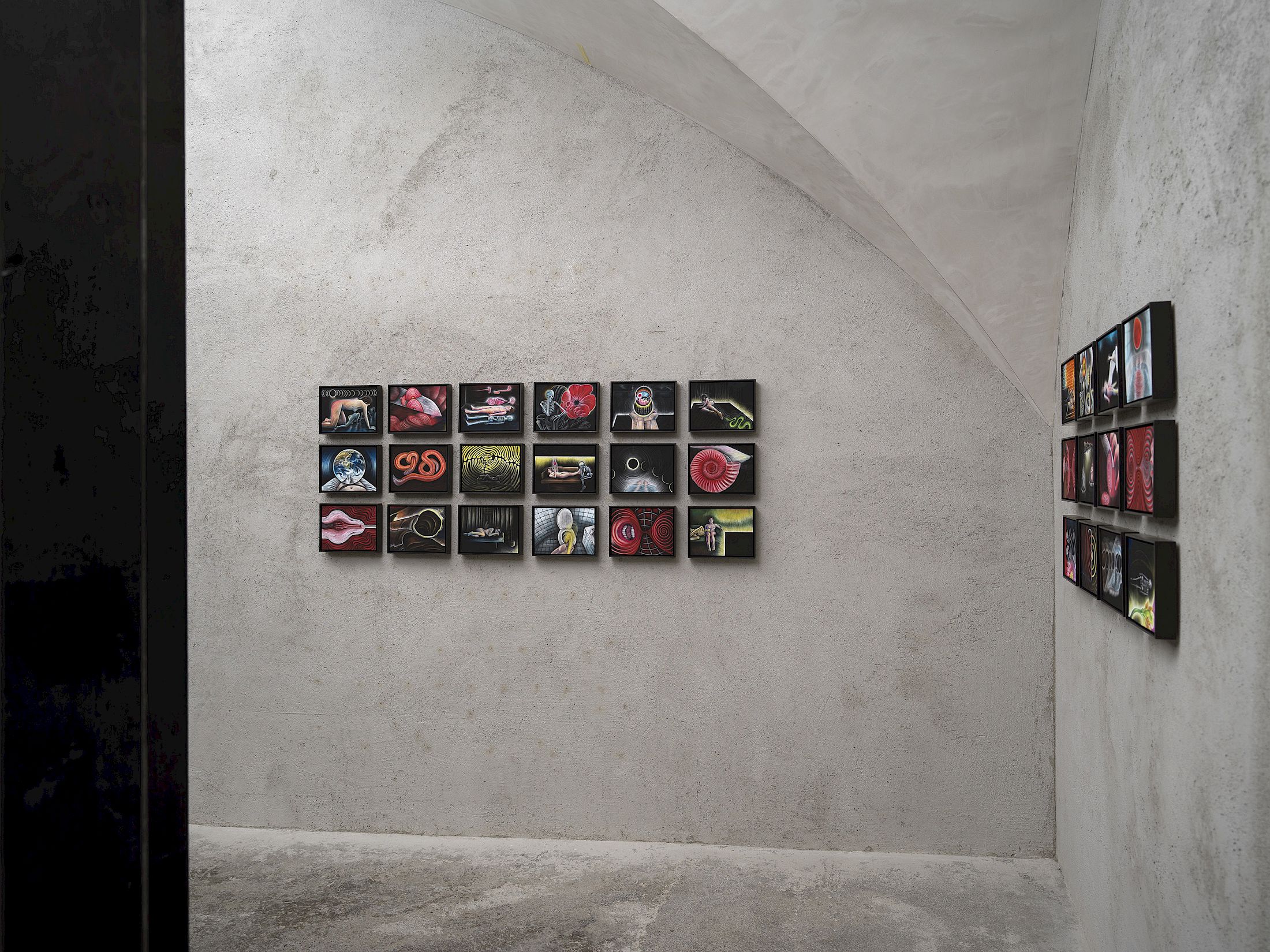
Exhibition view Emma Jung & Rebecca Ackroyd «Tage und Nächte», Cabaret Voltaire 2025; Rebecca Ackroyd, The World as I see it (Series), 2022–ongoing. Photo: Cedric Mussano. Courtesy: the artist
Exhibition view Emma Jung & Rebecca Ackroyd «Tage und Nächte», Cabaret Voltaire 2025; Emma Jung-Rauschenbach, Drawing of a rainbow-colored earth globe (Urgo Series), undated; Drawing of a colorful sphere (Urgo Series), 1918. Photo: Cedric Mussano. Courtesy: Familienarchiv Jung, © 2007 Stiftung der Werke von C.G. Jung, Zürich
Exhibition view Emma Jung & Rebecca Ackroyd «Tage und Nächte», Cabaret Voltaire 2025. Photo: Cedric Mussano. Courtesy: Familienarchiv Jung, © 2007 Stiftung der Werke von C.G. Jung, Zürich & the artist
Exhibition view Emma Jung & Rebecca Ackroyd «Tage und Nächte», Cabaret Voltaire 2025; Rebecca Ackroyd, The World as I feel it (Series), 2025. Photo: Cedric Mussano. Courtesy: the artist
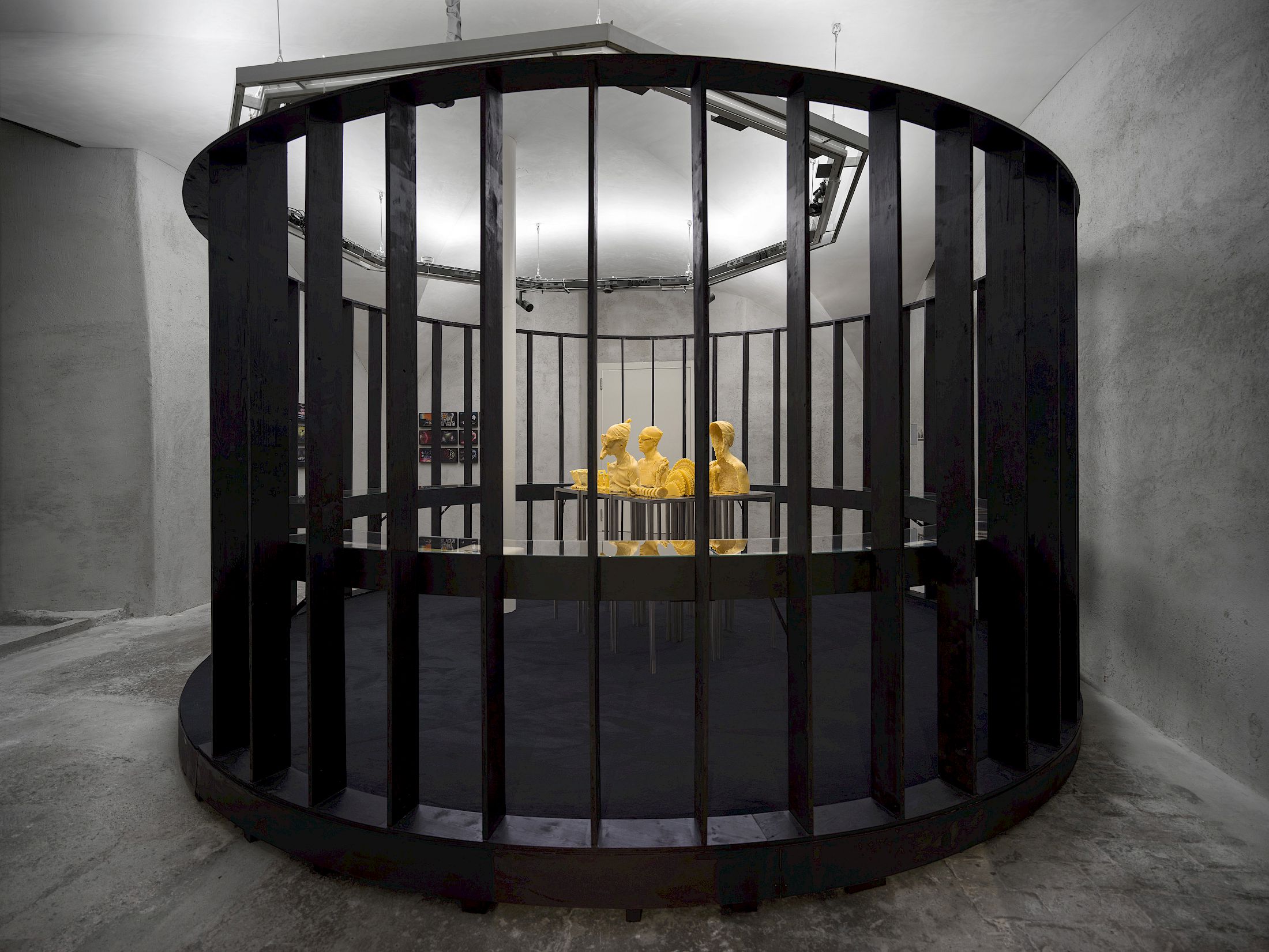
Exhibition view Emma Jung & Rebecca Ackroyd «Tage und Nächte», Cabaret Voltaire 2025; Exhibits by Emma Jung-Rauschenbach; Rebecca Ackroyd, The World as I see it (Series), 2022–ongoing. Photo: Cedric Mussano. Courtesy: the artist
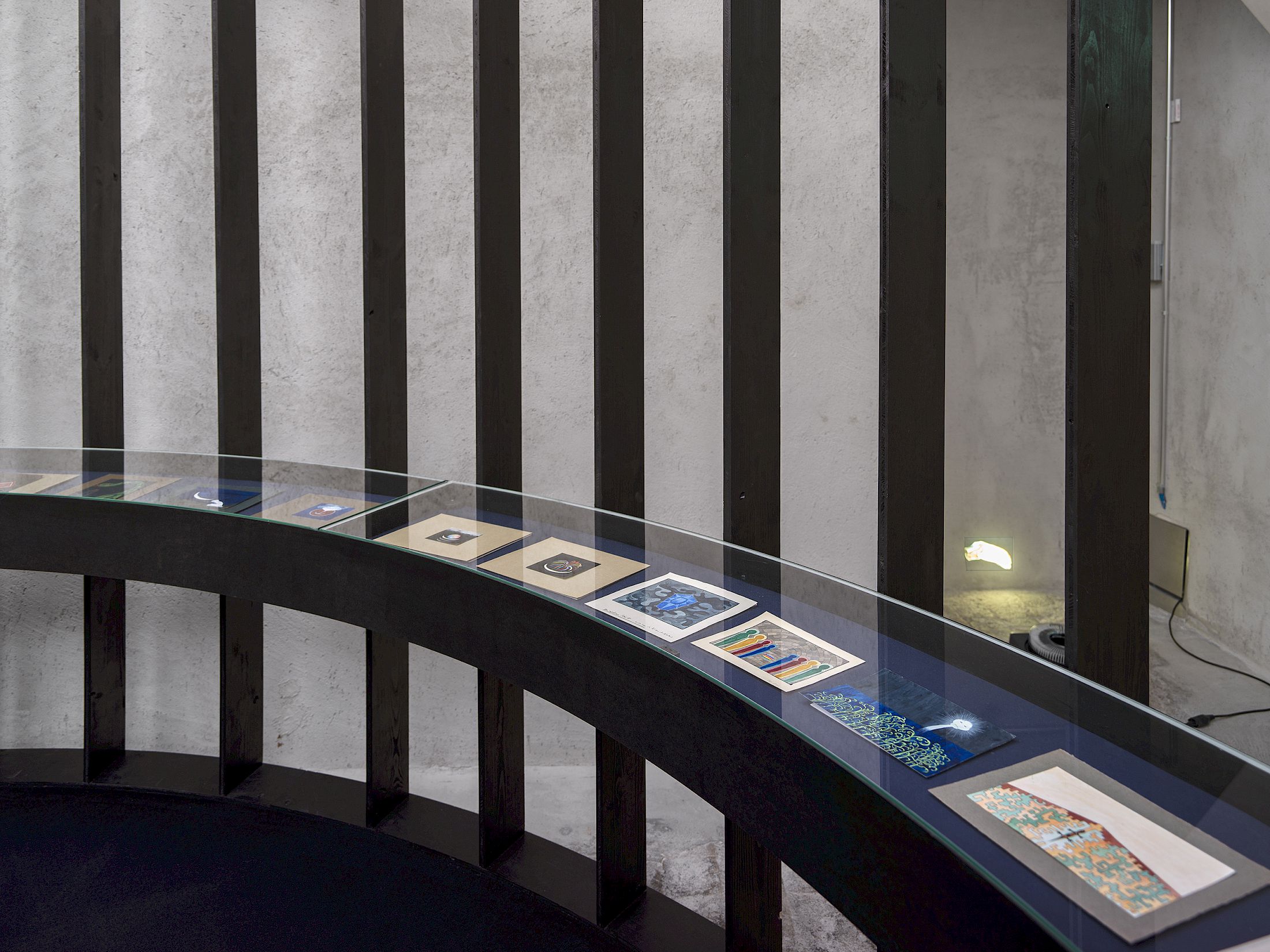
Exhibition view Emma Jung & Rebecca Ackroyd «Tage und Nächte», Cabaret Voltaire 2025; Exhibits by Emma Jung-Rauschenbach; Rebecca Ackroyd, The World as I see it (Series), 2022–ongoing. Photo: Cedric Mussano. Courtesy: the artist.
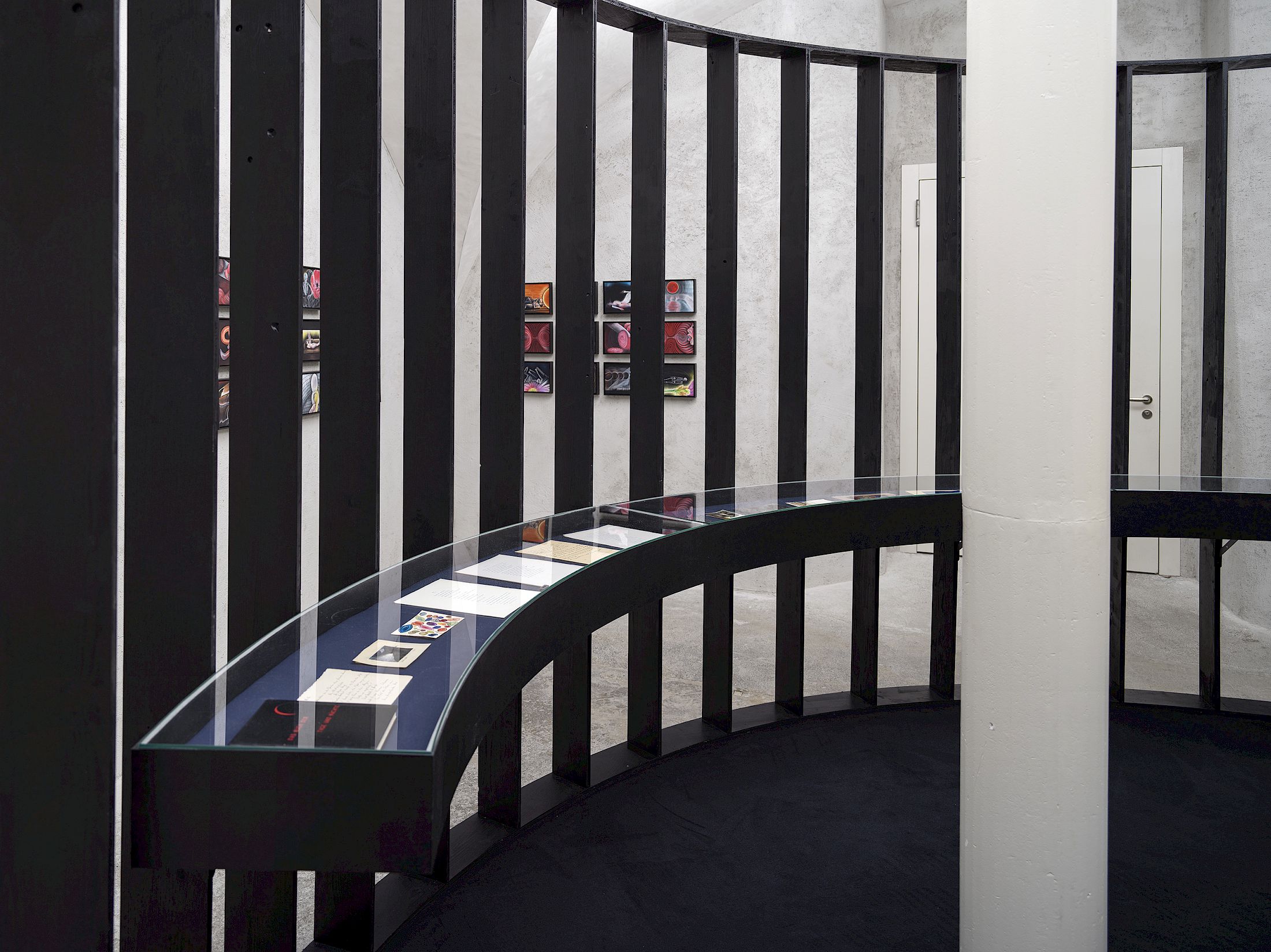
Exhibition view Emma Jung & Rebecca Ackroyd «Tage und Nächte», Cabaret Voltaire 2025; Exhibits by Emma Jung-Rauschenbach; Rebecca Ackroyd, The World as I see it (Series), 2022–ongoing. Photo: Cedric Mussano. Courtesy: the artist.
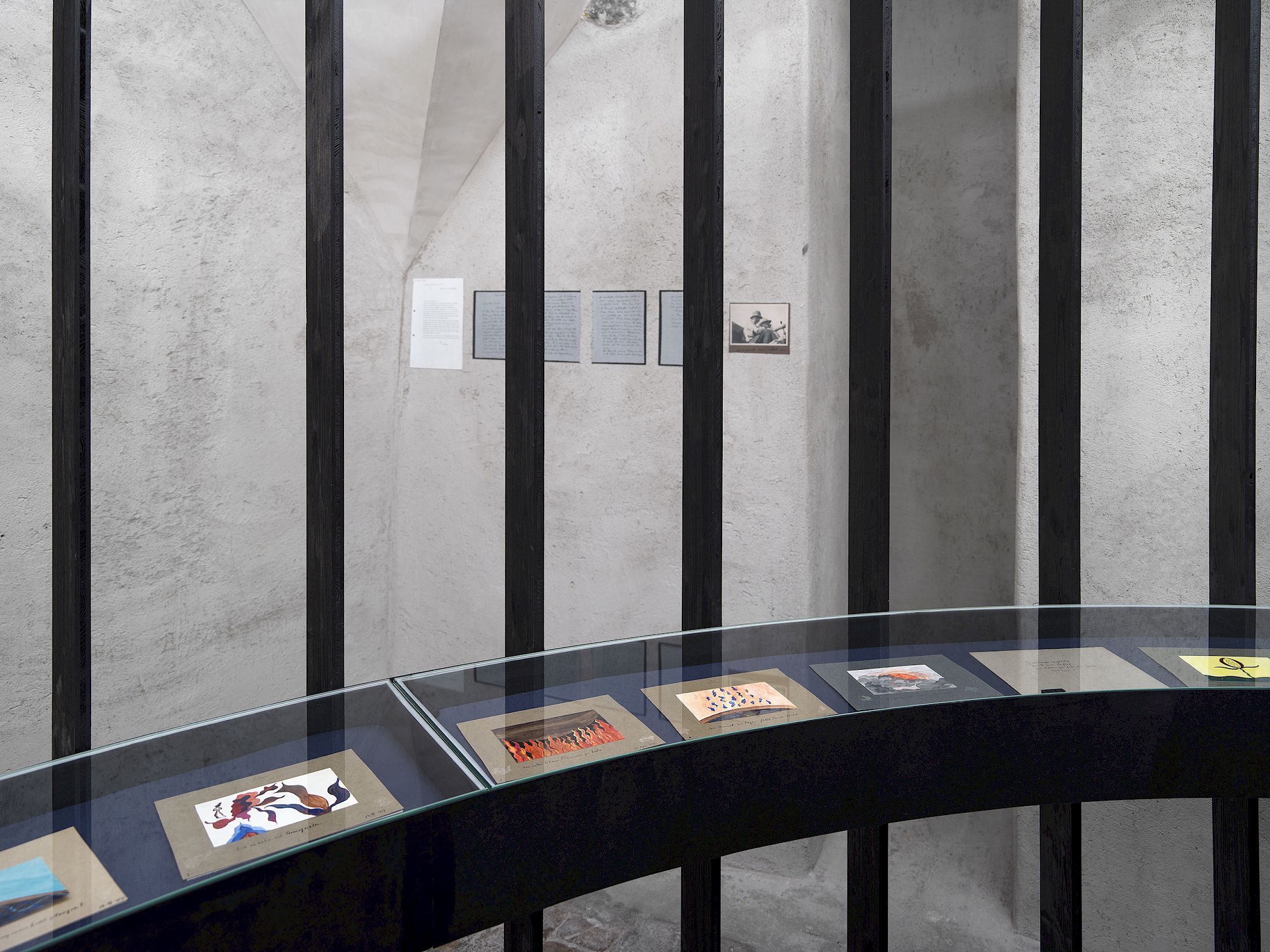
Exhibition view Emma Jung & Rebecca Ackroyd «Tage und Nächte», Cabaret Voltaire 2025; Rebecca Ackroyd, The World as I feel it (Series), 2025; The World as I see it (Series), 2022–ongoing. Photo: Cedric Mussano. Courtesy: the artist
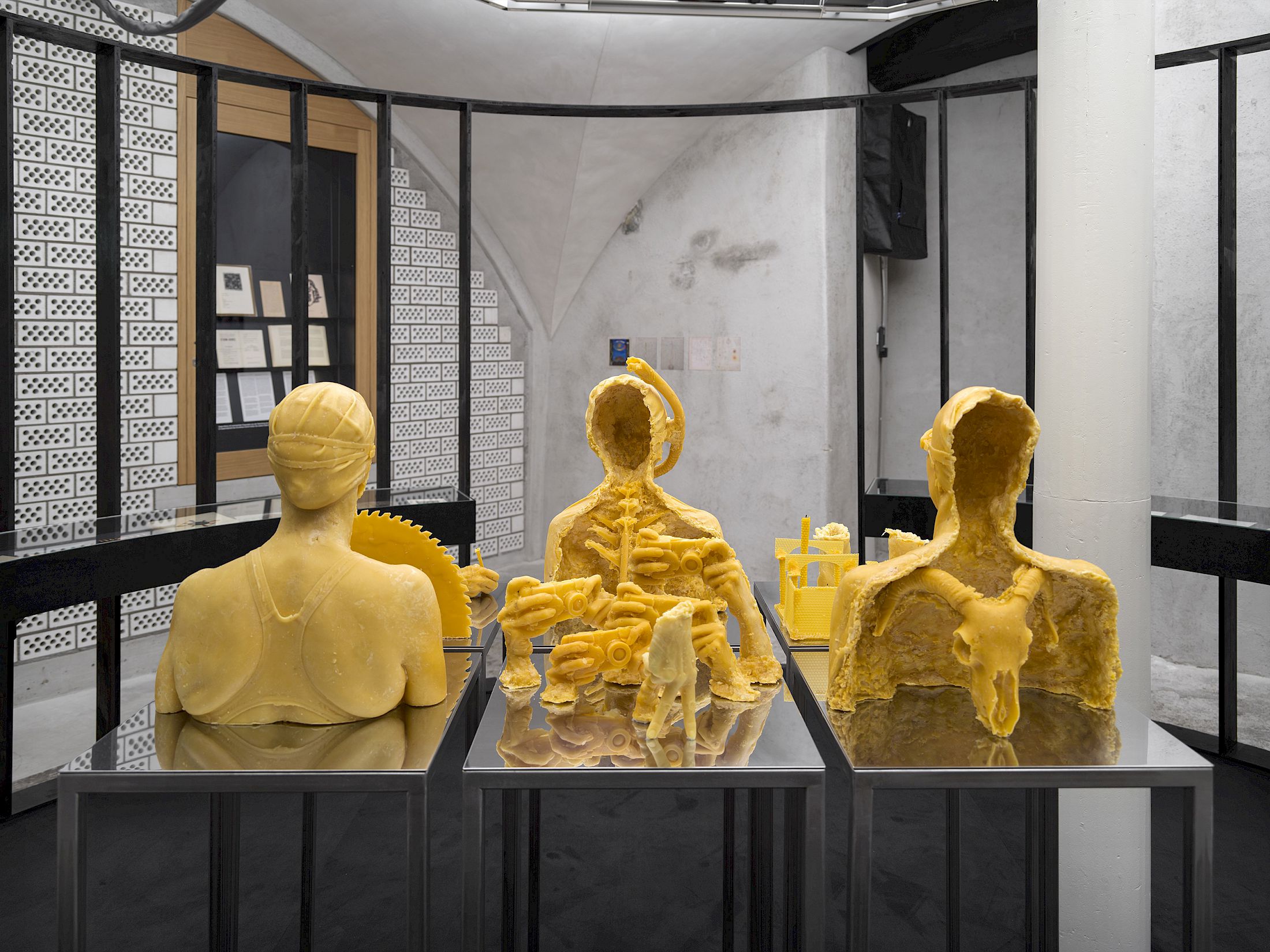
Exhibition view Emma Jung & Rebecca Ackroyd «Tage und Nächte», Cabaret Voltaire 2025; Emma Jung-Rauschenbach (printed scans), Image of an emerging world (Systema), probably 1919; Two pages from the dream book & diary, separation from the pleroma and increasing materialization as well as liberation from matter (Spiritualization), brown with embossed frame (System), 1919; One page from the dream book & diary, black with embossing, undated; Page with onion from the dream book & diary, black (movement oft he beginning), 1915. Photo: Cedric Mussano. Courtesy: Familienarchiv Jung, © 2007 Stiftung der Werke von C.G. Jung, Zürich Jung-Rauschenbach (printed scans), Image of an emerging world (Systema), probably 1919; Two pages from the dream book & diary, separation from the pleroma and increasing materialization as well as liberation from matter (Spiritualization), brown with embossed frame (System), 1919; One page from the dream book & diary, black with embossing, undated; Page with onion from the dream book & diary, black (movement oft he beginning), 1915. Photo: Cedric Mussano. Courtesy: Familienarchiv Jung, © 2007 Stiftung der Werke von C.G. Jung, Zürich
Exhibition view Emma Jung & Rebecca Ackroyd «Tage und Nächte», Cabaret Voltaire 2025; Dada Showcase with rotating exhibits from the collection of the Kunsthaus Zürich: Original; Kurt Schwitters, «Welt voll Irrsinn», 1919, Original; Richard Huelsenbeck, Dada siegt, 1920, Faksimile; Hans Richter, Zeichnung von Dr. Huber, 1977, Faksimile; Tristan Tzara, «Chronique Zurich», Anthologie Dada (4/5), 1919, Original; Sturm-Ausstellung 2. Serie, Zürich 1917. Photo: Cedric Mussano. Courtesy: Kunsthaus Zürich
Exhibition view Emma Jung & Rebecca Ackroyd «Tage und Nächte», Cabaret Voltaire 2025; Rebecca Ackroyd, The World as I feel it (Series) (detail), 2025. Photo: Cedric Mussano. Courtesy: the artist
Exhibition view Emma Jung & Rebecca Ackroyd «Tage und Nächte», Cabaret Voltaire 2025; Rebecca Ackroyd, The World as I feel it (Series) (detail), 2025. Photo: Cedric Mussano. Courtesy: the artist
Exhibition view Emma Jung & Rebecca Ackroyd «Tage und Nächte», Cabaret Voltaire 2025; Emma Jung-Rauschenbach, Watercolor of a cellar vault with colorful figures, undated; Image of a spirit over a water garden, undated; Watercolor of a salamander in a labyrinth, undated; Rebecca Ackroyd, The World as it is, 2025. Photo: Cedric Mussano. Courtesy: Familienarchiv Jung, © 2007 Stiftung der Werke von C.G. Jung, Zürich & the artist
Exhibition view Emma Jung & Rebecca Ackroyd «Tage und Nächte», Cabaret Voltaire 2025; Emma Jung-Rauschenbach, Drawing of the magic dragon (Urgo Series), undated; Drawing of a white figure with crescent moon (Urgo Series), undated; Drawing of a smoking crescent moon (Urgo Series), 1917. Photo: Cedric Mussano. Courtesy: Familienarchiv Jung, © 2007 Stiftung der Werke von C.G. Jung, Zürich
Exhibition view Emma Jung & Rebecca Ackroyd «Tage und Nächte», Cabaret Voltaire 2025; Emma Jung-Rauschenbach, Drawing of the Madonna of Mercy, undated; Drawing of a candelabrum, 1917; Drawing of a red tree, undated. Photo: Cedric Mussano. Courtesy: Familienarchiv Jung, © 2007 Stiftung der Werke von C.G. Jung, Zürich
Exhibition view Emma Jung & Rebecca Ackroyd «Tage und Nächte», Cabaret Voltaire 2025. Photo: Cedric Mussano. Courtesy: Familienarchiv Jung, © 2007 Stiftung der Werke von C.G. Jung, Zürich & the artist
Exhibition view Emma Jung & Rebecca Ackroyd «Tage und Nächte», Cabaret Voltaire 2025; Rebecca Ackroyd, The World as I see it (Series) (detail), 2022–ongoing. Photo: Cedric Mussano. Courtesy: the artist
Exhibition view Emma Jung & Rebecca Ackroyd «Tage und Nächte», Cabaret Voltaire 2025; Rebecca Ackroyd, The World as I see it (Series) (detail), 2022–ongoing. Photo: Cedric Mussano. Courtesy: the artist